Choosing a top automotive lighting supplier in China is not about finding the brightest lamp or the lowest quotation. It is about verifying performance, production consistency, and support after delivery. Automotive lighting consultant Daniel Stern’s published guidance emphasizes beam pattern and proper aiming. A concise paraphrase of that principle is: “Brightness matters only when the beam is controlled.” Treat it as a practical summary, not a verbatim quotation.
For buyers researching how to choose a reliable automotive lighting supplier, start with evidence. Ask for photometric test reports, sample units, material specifications, and clear records linking each batch to its components. Inspect the beam pattern on a real test surface; a bright hotspot can still leave road edges dim. Check how the supplier manages heat, moisture, vibration, and production changes. Details matter. A polished brochure is not proof, and I would not treat one successful sample as proof of stable mass production either.
A careful review should also cover factory quality controls, communication, warranty terms, and the supplier’s ability to explain failures without vague promises. Confirm that test documents and product claims match your intended market and application. Ask who owns corrective actions when a batch fails inspection. The answers may reveal more than a sales presentation. No supplier is perfect; what matters is whether problems are traceable, openly discussed, and fixed with evidence. This outline explores practical ways to compare Chinese automotive lighting suppliers before making a long-term sourcing decision.
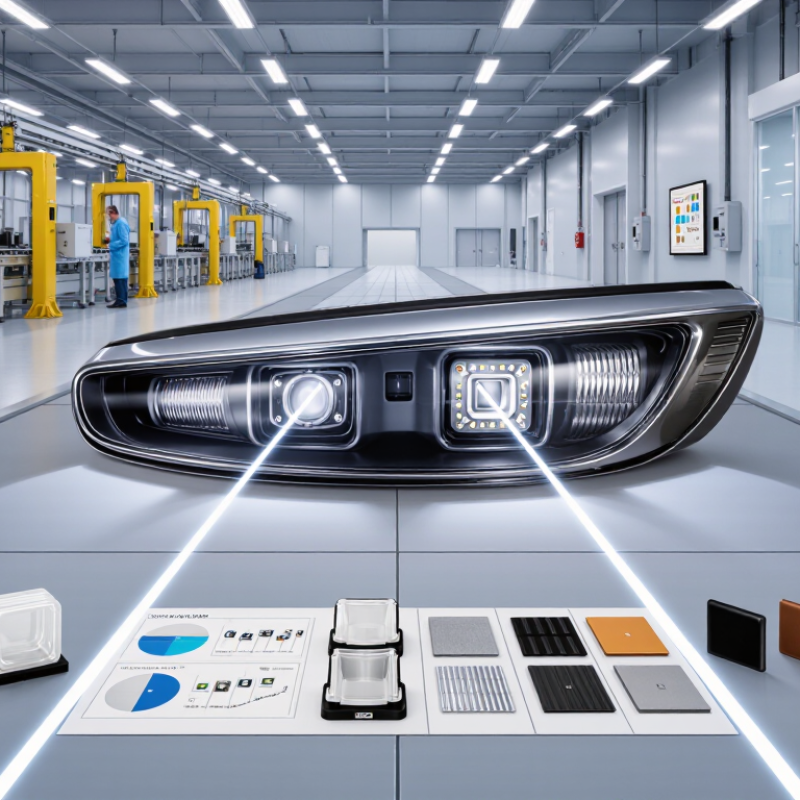
Before comparing automotive lighting suppliers, define where each product will be used. A headlamp for a passenger car has different optical, thermal, and packaging needs from a work lamp for a commercial vehicle. Write down the vehicle type, installation position, operating voltage, light distribution, and expected service conditions. Be specific. “Bright enough” is not a usable requirement; a beam pattern, target output, or reference drawing gives engineers something to assess.
Set the product scope early. Decide whether you need complete lamp assemblies, optical components, housings, or custom development. Share available space, connector details, mounting points, and material preferences. If you have samples, drawings, or photos of the mounting area, include them. Small details matter. A few millimeters can affect fit, sealing, or beam alignment. Ask suppliers how they verify output, water resistance, vibration performance, and heat management, and request test records relevant to your application. Avoid assuming that one test result covers every configuration.
Also state expected quantities, development timing, and any required packaging or labeling. These details help suppliers judge tooling and production needs before quoting. It is easy to overlook future variants; note them if different trims or markets may follow. Not every requirement will be final. Mark open questions clearly, then confirm them during technical review. A clear scope makes proposals easier to compare, though the first specification may still need revision after sample evaluation.
China’s automotive lighting suppliers generally fall into three groups: integrated manufacturers, specialist component makers, and trading companies. Integrated manufacturers develop and produce complete assemblies, such as headlamps with housings, lenses, and wiring. Some offer OEM or ODM services, but their engineering depth and production control can differ considerably.
Specialist suppliers focus on parts such as LED modules, optical lenses, reflectors, or electronic drivers. They may provide stronger expertise in one component, though buyers often need to coordinate several vendors. Ask for material specifications, test reports, and samples from the actual production line. A lens that looks clear on a desk may show uneven light distribution once installed.
Trading companies connect buyers with factories and can simplify communication or consolidate orders. However, they may not control manufacturing directly. Clarify who handles design changes, quality checks, and warranty claims before placing an order. Visit the factory when practical, or request dated production photos and inspection records. Small details matter. Check connector fit, sealing surfaces, and carton labels. Even experienced teams can miss a mismatch, so keep written specifications current and verify the first production batch carefully.
| Supplier Type | Typical Products and Role | Potential Advantages | Best Fit For | What to Verify |
|---|---|---|---|---|
| Automotive Tier 1 Suppliers | Develop and supply complete lighting systems or major assemblies, such as headlamps, rear lamps, and associated electronics, for vehicle manufacturers. | May provide engineering support, system integration, validation, and production processes suited to long-term vehicle programs. | Vehicle manufacturers and buyers seeking program-specific lighting systems and structured technical collaboration. | Relevant program experience, engineering and testing capabilities, quality-management processes, production capacity, and ability to meet the vehicle maker’s specifications. |
| Independent Aftermarket Manufacturers | Produce replacement or upgrade lighting assemblies and components for vehicles already in service. | Can offer a broad range of applications and product configurations for repair, replacement, or customization markets. | Importers, wholesalers, repair-parts distributors, and retailers serving the replacement-parts market. | Vehicle fitment coverage, product consistency, applicable market regulations, warranty terms, packaging, and traceability. |
| Specialist Component Manufacturers | Focus on individual parts or technologies, such as LED modules, optical components, drivers, housings, lenses, or wiring assemblies. | Specialized production knowledge can support buyers that need a particular component rather than a complete lamp assembly. | Lighting-system manufacturers and integrators sourcing parts for their own designs or production lines. | Component specifications, material and process controls, compatibility with the intended system, test documentation, and change-control procedures. |
| OEM/ODM Export Manufacturers | Manufacture products to a buyer’s requirements (OEM) or provide design and product-development services alongside manufacturing (ODM). | May support private-label products, customized specifications, and export-oriented order arrangements. | Importers and brands looking for customized products or manufacturing under their own specifications and packaging. | Ownership of drawings and tooling, sample approval process, production quality controls, export documentation, minimum order quantities, and delivery terms. |
| Trading Companies and Distributors | Source products from one or more manufacturers and coordinate sales, communication, consolidation, or distribution. | Can simplify sourcing across multiple product categories and may offer export coordination or access to a broader supplier network. | Buyers seeking a sourcing intermediary, consolidated orders, or distribution support rather than direct factory engagement. | Whether the business is the manufacturer or an intermediary, factory identity, product origin, inspection arrangements, communication responsibility, and after-sales support. |
When assessing a Chinese automotive-lighting supplier, request test evidence for the exact lamp and configuration—not a generic factory brochure. OICA’s 2023 production statistics record about 93.5 million motor vehicles built worldwide, underscoring the scale and variety suppliers must handle. The IEA’s Global EV Outlook 2025 reports that electric-car sales exceeded 17 million in 2024, adding further variation in vehicle architectures. Volume alone proves little. Ask for photometric reports, thermal-cycle and vibration results, and ingress-protection data matched to the housing and connector. Compare beam patterns, color temperature, sealing, and connector fit across production samples. Small differences matter.
Review current IATF 16949 and ISO 9001 certificates, confirming the site, scope, and validity with the issuing certification body. These systems support process control; they do not certify every lamp’s performance. For export programs, request applicable approval records and traceability linking each unit to its test and production batch. Walk the line if possible. Look for calibrated photometric equipment, controlled torque tools, clean sealing stations, and documented defect handling. Capacity needs evidence too: ask for monthly output by product family, utilization, lead times, tooling ownership, and backup plans for critical components. Request actual shift records, not only nameplate capacity. A capable supplier may still have gaps. I would pause over an unexplained test exception, even when samples look excellent.
A reliable automotive lighting supplier should explain how its engineering team handles a product from drawing review to production. Ask who checks beam patterns, housing fit, heat management, and sealing details. The answers should be specific, not just “our engineers can support you.” Request a sample test report and confirm which conditions were tested, such as vibration or high temperatures. A clear record makes technical discussions easier.
Communication matters when a design changes. Share a drawing revision and ask how the supplier will confirm it, update sample parts, and flag risks. A named technical contact and written change log can prevent old specifications from reaching the production line. Notice response quality, too: a thoughtful question about material thickness may be more useful than a fast, vague promise. Small details count.
Delivery reliability needs evidence beyond an estimated lead time. Ask for a production schedule showing tooling, sample approval, component sourcing, and inspection checkpoints. Discuss how delays are reported and what happens if a component arrives late. Compare promised dates with records from similar projects, where available. One weakness can remain: even a well-organized supplier may underestimate a new design’s testing time. Build a little schedule room, and assess whether the supplier raises that concern early.
Suggested assessment weights for comparing suppliers
This proposed 100-point framework gives the greatest weight to delivery reliability, followed by engineering support and communication. Use it as a starting point, then score each supplier against verifiable evidence such as validation records, response times, and on-time delivery history. These weights are a suggested evaluation method, not industry survey results.
Choosing a top automotive lighting supplier starts with comparable quotations, not the lowest price. Ask each supplier to quote the same lamp configuration, materials, test scope, tooling, lead time, and warranty terms. OICA reported 93.5 million motor vehicles produced worldwide in 2023, showing the scale of the market that lighting suppliers serve. Scale matters, but it does not prove a factory can meet your requirements. Not enough.
Check credentials directly. Request current quality certificates, confirm their scope and issuing body, and review inspection records for the exact production site. Ask for sample test reports covering beam pattern, brightness, thermal performance, vibration, and water resistance. IIHS research found vehicles with good-rated headlights had 19% fewer nighttime single-vehicle crashes than those with poor-rated headlights. That finding makes optical test evidence more meaningful than a polished catalogue. Still, test results from one sample cannot guarantee every production batch.
Compare quotations line by line, then assess the people and process behind them. Ask who approves design changes, how defects are recorded, and whether batch traceability is available. A factory visit can reveal practical details: calibrated equipment, clearly labeled components, and orderly inspection stations. No audit is perfect. A neat showroom can distract from weak follow-up, so check references and request corrective-action records before selecting a partner.
Specify the vehicle type, mounting position, operating voltage, beam pattern, and service conditions. “Bright enough” is too vague.
State whether you need complete lamps, components, housings, or custom development. Share drawings, connector details, mounting points, and available space.
A few millimeters can affect fit, sealing, or beam alignment. Small details matter.
Ask for relevant test records covering light output, water resistance, vibration, and heat management. Check that the results match your configuration.
Integrated manufacturers make complete assemblies. Specialist suppliers focus on parts such as lenses or LED modules. Trading companies connect buyers with factories.
Request material specifications, test reports, and samples from the actual production line. A lens may look clear on a desk but perform unevenly when installed.
Confirm who manages design changes, quality checks, and warranty claims. The company may not control factory production directly.
When practical, visit the factory or request dated production photos and inspection records. Verify connector fit, sealing surfaces, and carton labels.
Share expected quantities, development timing, and packaging or labeling needs. Mention possible future versions, even if plans are not final.
Not necessarily. Mark open questions and review them with the supplier. Sample evaluation may reveal details your team missed.
Choosing the right automotive lighting supplier in China begins with a clear definition of your product scope, target vehicles, performance needs, and expected order volumes. Understanding whether you need a manufacturer, trading company, or engineering-focused supplier can help narrow your options. Then assess product quality, relevant certifications, production equipment, quality-control procedures, and the capacity to support both initial orders and future growth.
A dependable partnership also relies on responsive engineering support, clear communication, and realistic production and delivery schedules. When comparing quotations, look beyond unit price to consider specifications, tooling, testing, packaging, and ongoing service. Verify each supplier’s business credentials, manufacturing capabilities, and track record before making a decision. By weighing these factors together, you can make a more informed choice and understand how to choose a reliable automotive lighting supplier that fits your technical, commercial, and operational requirements.

DERT Lighting