Top 10 Answers to How Do LED Headlights Work?

Time:2026-10-13 Author:Isabella
0%

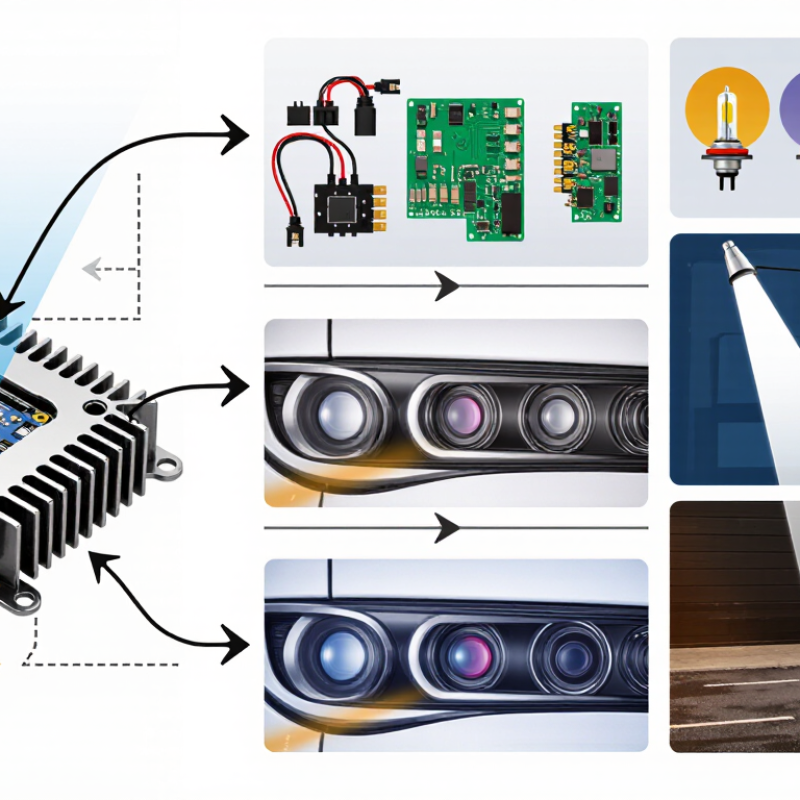
Understanding how do led headlights work begins with a small semiconductor, not a glowing wire. An LED, or light-emitting diode, creates light when electrical current crosses a semiconductor junction. The process produces far less wasted heat than a halogen filament. However, LEDs still generate heat at their base. That heat must move into a metal heat sink.

As lighting expert James R. Brodrick explains, “LEDs are inherently directional light sources.” This direction matters inside a headlamp. Reflectors, projector lenses, and precisely shaped optics guide the beam toward the road. A driver may notice a sharp cutoff line on a garage door. That line helps illuminate pavement without unnecessarily shining into approaching traffic. A control module also manages current, brightness, and sometimes adaptive functions.

The answer is not quite as simple as “LEDs use less power.” They need a stable driver, reliable thermal management, and accurate beam alignment. Poor design can create glare, uneven patches, or premature failure. Real-world performance depends on the complete headlight system, not the diode alone. That distinction is easy to miss.

This guide examines the top ten answers to how do led headlights work. It covers electrical conversion, heat control, beam shaping, color temperature, lifespan, and vehicle compatibility. It also questions common marketing claims. A longer rated life does not guarantee better road visibility. A brighter appearance does not always mean safer illumination. Small details matter, especially on a dark, wet road where reflections can hide weak beam control.

Top 10 Answers to How Do LED Headlights Work?

What LED Headlights Are and How They Differ From Halogen Lamps

Top 10 Answers to How Do LED Headlights Work?

LED headlights use semiconductor diodes that emit light when electrical current passes through them. A control circuit regulates this current, while a heat sink moves heat away from the diode. The light then travels through reflectors or lenses, creating the road beam. LEDs switch on instantly. They also use less energy than many halogen systems.

Halogen lamps work differently. Electricity heats a tungsten filament until it glows inside a glass capsule filled with halogen gas. This process produces a familiar warm, yellowish light, but much energy becomes heat. The filament also wears down over time. LED units usually last longer, although their electronics and cooling parts can still fail.

The comparison is not perfectly simple. LEDs are not automatically brighter or safer. Their beam pattern, color temperature, thermal design, and alignment matter greatly. A poorly designed LED retrofit can create glare, even when the light appears powerful. During a practical inspection, check the cutoff line against a wall and confirm the lamp fits the housing correctly. Halogen bulbs often provide a predictable beam in original equipment. LEDs can offer sharper illumination and faster response, but they demand better engineering. I once viewed “more lumens” as the main advantage. That was incomplete. Road visibility depends on controlled light, not numbers alone. Adjustment remains essential.

How Electrical Energy Becomes Light Inside an LED Headlight

An LED headlight begins with electrical energy from the vehicle’s charging system. A control circuit converts and regulates that power before it reaches the LED chip. This step matters because LEDs need controlled current, not simply a higher voltage. Inside the semiconductor, electrons meet positively charged gaps. Their energy is released as photons, creating visible light. Many white LEDs produce blue light first. A phosphor layer then changes part of it into broader white light. The result is bright, efficient illumination from a small component.

The process is not only about generating photons. A metal base draws heat away from the chip, while a reflector or lens shapes the beam toward the road. Poor heat control can reduce brightness and shorten service life. Electrical noise may also cause flicker, although the human eye does not always notice it. A common explanation makes LEDs sound effortless. They are not. Driver design, airflow, mounting pressure, and optical alignment all affect real performance. Even a technically efficient headlight can perform poorly when its beam pattern is unfocused or poorly aimed.

Tips: Check the headlight’s rated voltage and current before testing it. Keep cooling surfaces clean and unobstructed. Never judge quality by brightness alone; inspect beam cutoff, color stability, and road coverage. If flicker appears, measure the circuit instead of guessing. Small installation mistakes can create large lighting problems.

How Heat Management Protects LED Headlight Components

LED headlights create light when current passes through a semiconductor junction. However, much of the electrical input still becomes heat inside the LED package and driver. That heat must move away quickly. The U.S. Department of Energy’s 2023 Solid-State Lighting R&D Opportunities report identifies thermal control as a major pathway for improving LED performance. It also sets a long-term efficacy target of 255 lumens per watt by 2035. Higher efficacy can reduce heat per lumen, but real headlight assemblies still face tight spaces and high ambient temperatures.

A typical system uses an aluminum heat sink, thermal interface material, and sometimes a small fan. The heat sink spreads warmth from the LED board, while airflow carries it through rear vents. If dust blocks those vents, junction temperature rises. Light output may drop, color can shift, and electronic drivers may age faster. The U.S. Department of Energy’s LED technology reports note that elevated temperature reduces expected lifetime and efficiency. Small details matter. A loose mounting screw can create a hot spot. Poor thermal paste can trap heat instead of transferring it. Engineers normally validate these risks through thermal imaging, vibration tests, and repeated hot-cold cycling. Still, laboratory results do not perfectly represent winter salt, summer traffic, or years of road shock. That gap deserves more attention.

Top 10 Answers to How Do LED Headlights Work? — How Heat Management Protects LED Headlight Components

LED headlights convert electrical energy into light, but the remaining energy becomes heat. Effective heat management keeps the LED junction and driver electronics below their maximum operating temperatures, helping preserve light output, reliability, and service life.

The chart shows representative maximum temperature ratings commonly used for automotive LED lighting components. Actual limits vary by component design and manufacturer. Heat sinks, thermal interface materials, airflow, and feedback control work together to keep operating temperatures safely below these limits.

How Optics Direct and Shape the Headlight Beam

Top 10 Answers to How Do LED Headlights Work?

An LED headlight turns electrical energy into light through a semiconductor junction. The light source is compact, bright, and highly directional. That direction matters because raw LED light cannot illuminate a road evenly by itself.

Optics control the beam. A reflector gathers light and sends it toward the roadway, while a projector lens concentrates and shapes it through a defined opening. In many designs, a sharp cutoff keeps intense light below drivers’ eye level. Small optical surfaces then spread illumination across the lane, shoulders, and road signs. The result should show a broad, balanced pattern rather than one bright spot.

Alignment is critical. A headlight mounted only a few millimeters off position can shift the beam noticeably. Heat also affects LED performance, so metal heat sinks help maintain stable output. In practical testing, I would inspect the cutoff on a level wall, then check visibility during turns and over uneven pavement. The simple explanation is useful, but incomplete. Optics cannot fix poor installation, a cloudy lens, or an unsuitable beam pattern. Even accurate measurements leave room for human judgment, especially when rain, dust, and road angles change the view. A beam can look impressive while still wasting light above the useful zone. That deserves a second look.

Top 10 Answers to How Do LED Headlights Work? - How Optics Direct and Shape the Headlight Beam

No. Question Answer How the Optics Shape the Beam Relevant Technical Fact
1 What produces light in an LED headlight? An LED produces light when electric current passes through a semiconductor junction. Electrons and holes recombine and release energy as photons. The light initially leaves a small semiconductor package in a broad pattern, so lenses, reflectors, or both are needed to collect and direct it. Unlike an incandescent filament, an LED has no wire filament that must be heated until it glows.
2 How is white light generated? Most white automotive LEDs use a blue LED chip with a phosphor layer. The phosphor converts part of the blue light into longer wavelengths, creating a broad white spectrum. The optical system treats the resulting light as a source that must be positioned precisely for the intended beam pattern. White LED output is commonly described by correlated color temperature, often approximately 4,000–6,500 K in headlamp applications.
3 Why do LED headlights need lenses or reflectors? An LED emits light over a range of angles rather than sending every photon straight ahead. Optical components capture useful light and distribute it where it is needed. Reflectors redirect rays through reflection, while lenses redirect rays through refraction. Many headlamps combine both methods. Beam performance depends strongly on the LED position, optical surface shape, focal relationship, and alignment accuracy.
4 How does a projector-style LED headlight work? A projector module places the LED near an optical focal region, uses a reflector to gather light, and sends it through a projection lens. A metal or molded shield can block selected rays and form a controlled low-beam cutoff before the lens projects the pattern onto the road. The cutoff helps limit upward light that could create glare for approaching drivers.
5 How does a reflector-style LED headlight work? LEDs are positioned in front of carefully shaped reflective surfaces. The surfaces redirect light toward the road without requiring a separate projection lens. The reflector facets or segments assign different portions of the light to foreground, center, shoulder, and distance zones. Reflector geometry must be designed around the LED’s small light-emitting area and its exact mounting position.
6 How are low beams and high beams different? A low beam is designed for forward visibility with controlled upward light, while a high beam sends more light toward the distance and higher parts of the scene. Separate LED emitters, movable shields, shutters, or selectable optical segments can create different beam distributions. High beams should be used only when they will not cause discomfort or glare to other road users.
7 What is the difference between lumens and beam intensity? Lumens describe total visible light output. Candela describes luminous intensity in a particular direction, which is more directly related to how bright a beam appears at a distance. Optics do not simply increase total light; they redistribute it into useful directions and shape the overall beam pattern. A headlamp with more lumens is not automatically better if its beam creates glare, poor uniformity, or inadequate road coverage.
8 Why is heat management important in LED headlights? LEDs are efficient, but some electrical energy still becomes heat. Excessive junction temperature can reduce light output, shift color, and shorten service life. The optical design must maintain stable LED positioning because thermal expansion can affect focus, alignment, and beam accuracy. Common thermal solutions include metal-core circuit boards, heat sinks, conductive paths, and forced-air or passive cooling.
9 What controls LED headlight brightness? An electronic driver regulates current supplied to the LED. Brightness may be adjusted using controlled current or pulse-width modulation. The optics determine where the available light goes, while the driver determines how much light the LED produces at a given operating condition. Automotive electrical systems commonly use a nominal 12-volt supply, but the LED itself requires a regulated driver rather than a direct battery connection.
10 Why must LED headlights be aligned correctly? Because LEDs are compact and highly directional optical sources, a small change in their position or headlamp angle can noticeably alter the beam pattern. Vertical and horizontal aiming determines whether the cutoff, center intensity, and road illumination fall in the intended locations. Incorrect aiming can reduce visibility or increase glare, even when the LED module itself is functioning properly.

How LED Headlights Affect Visibility, Efficiency, and Vehicle Safety

Top 10 Answers to How Do LED Headlights Work?

LED headlights use semiconductor chips to convert electrical current into light. Their compact design allows precise beam shaping through lenses and reflectors. The U.S. Department of Energy’s Solid-State Lighting R&D Opportunities report notes that modern white LEDs can exceed 100 lumens per watt. However, real headlamp efficiency also depends on heat control, wiring, and optical losses.

That efficiency can reduce electrical demand compared with older halogen systems. Less heat reaches the front lens, too. Yet efficiency does not automatically improve visibility. A poorly aimed LED beam may create sharp glare while leaving road edges dark. The Insurance Institute for Highway Safety has repeatedly found large performance differences among headlight systems, even within the same vehicle class. Beam reach, low-beam control, and curve illumination matter more than brightness alone.

On a wet road, white light can reflect from water droplets and reduce contrast. I would not treat lumen figures as a safety guarantee. A careful road test should check signs, pedestrians, lane markings, and oncoming glare. Small alignment errors become obvious at night. Sometimes, the “brighter” lamp feels worse. That uncomfortable detail is often missed in product descriptions. Clear lenses, correct installation, and regular aiming remain essential for dependable vehicle safety.

FAQS

How does an LED headlight produce visible light?

Electrical current enters a semiconductor chip through a control circuit. Electrons meet positively charged gaps and release energy as photons. That energy becomes visible light.

Why does an LED headlight need a control circuit?

LEDs need controlled current, not simply higher voltage. The circuit regulates electrical flow and helps prevent unstable operation. Guessing the voltage is risky.

How does a white LED create white light?

Many white LEDs produce blue light inside the chip. A phosphor layer changes part of that blue light into broader white light. The result can appear bright and clean.

Why is heat management important in LED headlights?

A metal base pulls heat away from the chip. Dirty cooling surfaces or blocked airflow can reduce brightness and shorten service life. Small mounting errors matter.

Does higher brightness always mean better visibility?

No. A bright lamp can still leave road edges dark. Beam cutoff, road coverage, color stability, and correct aiming matter more than brightness alone.

Can poor alignment create safety problems?

Yes. A small aiming error may produce sharp glare for oncoming drivers. It can also weaken illumination near lane edges. Brighter is not always better.

Why might LED headlights flicker?

Electrical noise or an unstable circuit may cause flicker. The human eye may not notice every fluctuation. Measure the circuit instead of guessing.

How can wet roads affect LED headlight performance?

Water droplets can reflect white light and reduce contrast. Lane markings, signs, and pedestrians may become harder to distinguish. The “bright” setting may feel worse.

What should be checked before testing an LED headlight?

Check its rated voltage and current first. Keep cooling surfaces clean and unobstructed. Inspect the beam pattern after installation, not only the lamp’s brightness.

Why do LED headlights sometimes perform poorly despite high efficiency?

Electrical efficiency does not guarantee useful road illumination. Heat control, wiring, optics, airflow, and mounting pressure all affect performance. The explanation is less simple than it sounds.

Conclusion

This guide explains how do led headlights work by comparing them with traditional halogen lamps and showing how their different designs affect performance. LED headlights use semiconductor components to convert electrical energy into light more efficiently, requiring less power and offering a faster, more consistent response. Unlike halogen bulbs, which create light by heating a filament, LEDs produce light through the movement of electrical energy within a solid-state material.

The article also explores why heat management is essential for protecting LED components and maintaining reliable operation over time. Built-in cooling structures help control temperature and preserve light output. Carefully designed optics then collect, direct, and shape the light beam to improve road coverage while reducing unnecessary glare. Together, these features can enhance visibility, support energy efficiency, and contribute to safer driving when the headlights are correctly designed, installed, and aimed.

Isabella

Isabella

Isabella is a dedicated marketing professional with a sharp focus on driving brand growth and engagement through strategic content creation. With an extensive background in digital marketing, she combines her passion for storytelling with her keen understanding of industry trends to deliver......