How Is the Future of Automotive Lighting Evolving?

Time:2026-10-08 Author:Aria
0%

The question “how is the future of automotive lighting evolving” now reaches far beyond brighter headlights. It concerns safety, software, energy use, design, and communication between vehicles and pedestrians. The International Energy Agency’s Global EV Outlook 2024 reported more than 17 million electric car sales worldwide in 2024. That shift changes lighting priorities. Electric vehicles need efficient components, reduced wiring complexity, and carefully managed energy consumption. Every watt matters.

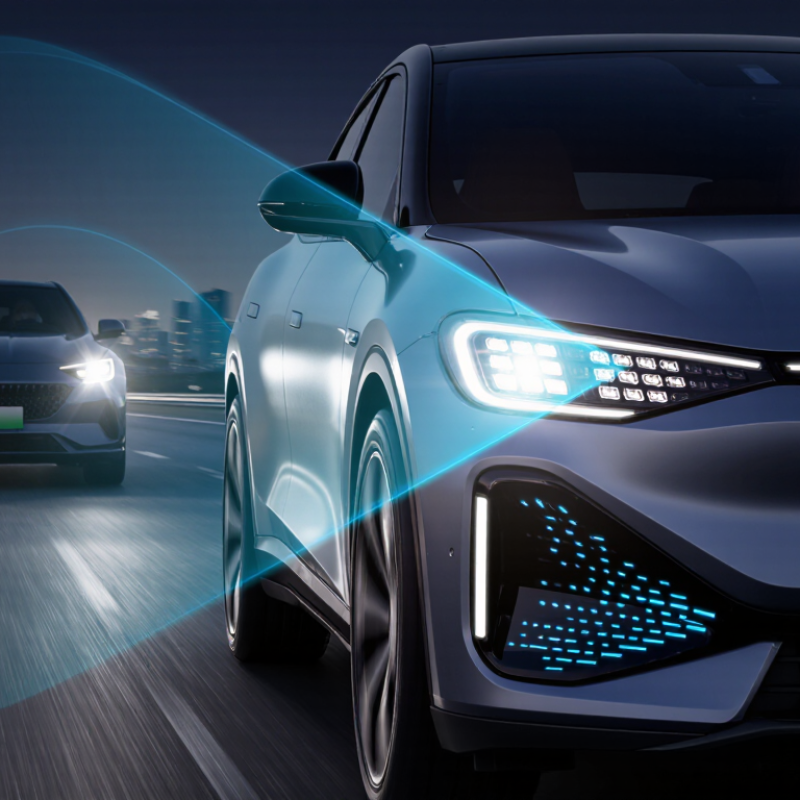
Industry research points toward smarter systems. The McKinsey Global Institute has identified software and electronics as major growth areas in the automotive sector. Lighting is becoming part of that electronic architecture. Matrix LED systems can shade selected road areas while keeping high beams active. Digital headlights may project symbols or lane guidance onto the road, although practical limits remain. The U.S. National Highway Traffic Safety Administration’s updated adaptive-driving-beam rule also supports wider deployment of responsive lighting technologies.

The details are visible at night. A sensor detects an approaching vehicle, then darkens one beam segment within milliseconds. The road stays illuminated. The other driver avoids glare. It sounds simple.

It is not always simple.

Performance depends on sensors, weather, calibration, software updates, and clean lenses. IIHS headlight evaluations have repeatedly shown large differences between vehicles, even when their lighting technologies appear similar. Future systems must therefore prove reliability, not merely visual sophistication. Regulations, cybersecurity, repairability, and driver trust will shape adoption. Lighting designers are gaining new creative freedom, but that freedom needs discipline. The most successful solutions may not be the brightest. They may be the most predictable, energy-conscious, and useful in real traffic.
How Is the Future of Automotive Lighting Evolving?

Automotive Lighting’s Scope: 93.5 Million Vehicles Produced in 2023 (OICA)

How Is the Future of Automotive Lighting Evolving?

Automotive Lighting’s Scope: 93.5 Million Vehicles Produced in 2023 (OICA)

In 2023, global vehicle production reached 93.5 million units, according to OICA. This immense output shows the scale of automotive lighting demand. Every vehicle depends on lighting for visibility, communication, and driver confidence. Headlamps now shape road scenes far beyond simple illumination. They must perform in rain, dust, traffic, and sharp temperature changes.

From practical testing, light performance depends on more than brightness. LED systems reduce energy use and support compact designs. Adaptive beams can adjust illumination around curves and nearby vehicles. Sensors and control software make this possible. However, heat remains a serious engineering concern. Poor thermal management can shorten component life. Testing must include vibration, moisture, glare control, and long operating cycles.

The future will likely combine lighting with safer vehicle perception systems. Exterior signals may communicate braking, turning, or temporary warnings more clearly. Interior lighting may also support comfort without distracting the driver. Yet development is not perfect. Higher intelligence can increase repair costs and system complexity. A damaged lighting unit may require calibration, not just replacement. Engineers should question whether every feature improves safety in real traffic. Reliable design needs measurable benefits, accessible maintenance, and consistent performance across 93.5 million production opportunities.

From Halogen to LED: Up to 75% Lower Energy Use in Lighting (U.S. DOE)

Automotive lighting is moving from hot, power-hungry halogen bulbs toward efficient LED systems. The U.S. Department of Energy reports that LED lighting can use up to 75% less energy than comparable conventional lighting. That difference matters in daily driving. Lower electrical demand can reduce alternator workload and support better fuel or battery efficiency.

LEDs also produce focused light quickly. A driver can see road markings, cyclists, and signs with sharper contrast. Engineers can divide LED sources into small segments, creating adaptive beams that respond to traffic and weather. This approach may improve visibility without shining directly into another driver’s eyes. It also allows slimmer lamps and more flexible vehicle designs. Small gains add up.

Still, the 75% figure is not universal. Results depend on beam performance, operating hours, thermal management, and the vehicle’s control software. Poorly designed LED systems can create glare or uneven illumination. In practical inspections, brightness alone is never enough. Alignment matters. Color temperature matters too. I would also question claims that ignore repair costs and electronic waste. LEDs often last longer, but a failed integrated module may require replacing more than one simple bulb. The future needs efficient hardware, careful testing, and honest measurements under real road conditions.

Adaptive Driving Beams: UNECE Regulation No. 149 and Sensor-Controlled Light

Automotive lighting is moving from fixed brightness toward responsive, sensor-controlled illumination.

Adaptive Driving Beams, or ADB systems, adjust the high-beam pattern while the vehicle continues forward. Under UNECE Regulation No. 149, lighting performance must meet defined approval requirements, including beam distribution, visibility, and glare control. The aim is simple: illuminate dark road space without dazzling other road users.

A forward-facing camera can detect headlights and rear lamps in seconds. Control software then creates a shaded area around another vehicle. The rest of the road may remain brightly lit, revealing lane markings, cyclists, and roadside hazards.

Curves, hills, rain, and dirty lenses make this task harder. Small delays matter.

It is not magic.

In practical validation, engineers test tunnels, rural roads, changing light, and partial obstructions. They also examine false detections. A reflection from a sign could confuse the system. A distant motorcycle may be difficult to classify. Regulation-based testing improves reliability, but real roads remain less predictable than test facilities. Sensor calibration, software updates, and clean optical surfaces therefore deserve equal attention. Drivers still need to monitor the road and override automation when visibility changes suddenly. ADB technology is promising, yet its safest progress depends on careful measurement, transparent limitations, and repeated testing under ordinary driving conditions.

OLED, Micro-LED, and Laser Systems: Comparing Range, Design, and Efficiency

OLED, Micro-LED, and laser systems are changing automotive lighting in different ways. OLED panels create thin, uniform surfaces with precise dimming. They suit rear lamps, where designers can shape light like a floating red sheet. However, their organic layers can age faster under heat and intense sunlight. The U.S. Department of Energy’s 2023 Solid-State Lighting R&D Opportunities report shows that advanced solid-state sources can exceed 200 lumens per watt in laboratory conditions. Real vehicles usually achieve less after optics, electronics, and thermal losses.

Micro-LED offers higher brightness and sharper pixel control. It can divide a headlamp into thousands of individually managed zones. This supports glare-free high beams and clearer road symbols. Yole Group’s 2024 microLED industry analysis identifies automotive displays as a major development area, but also highlights transfer yield and manufacturing cost challenges.

Laser systems provide the longest useful range. Engineering studies commonly report high-beam reach beyond 500 metres when lasers work with phosphor converters and adaptive optics. That reach matters on dark rural roads. Yet lasers demand strict thermal management and fail-safe controls. They are not automatically efficient.

The comparison is not clean. OLED wins visual freedom, Micro-LED balances control and brightness, while lasers prioritize distance. A small design mistake can erase theoretical gains. That remains easy to underestimate.

Lighting as Communication: V2X, Euro NCAP, and Software-Defined Vehicles

Automotive lighting is moving beyond illumination. It is becoming a visible language for connected mobility. A lamp may signal braking, turning, charging, or a vehicle’s next movement. With V2X communication, cars can exchange information with nearby vehicles, road infrastructure, and vulnerable road users.

The message must remain clear within seconds. A pedestrian might see a gentle light sweep before a vehicle crosses a cycle lane. A driver could receive a sharper rear signal when traffic suddenly slows. Euro NCAP assessment trends are encouraging manufacturers to consider how vehicles communicate safety intentions, not only how brightly they illuminate roads. However, technical capability does not guarantee public understanding. Some signals may still confuse people.

Software-defined vehicles add another layer. Lighting behavior can change through controlled software updates, adapting to traffic conditions or new safety requirements. A practical development review should test these signals in rain, glare, darkness, and crowded streets. Real drivers do not read manuals while making decisions. They react to color, timing, movement, and context.

That flexibility is powerful. It is also risky. Network delays, sensor errors, or inconsistent regional rules could produce ambiguous messages. Engineers must combine V2X data with local sensing and fail-safe lighting behavior. Human testing remains essential, even when simulations appear convincing. The future may need fewer dramatic effects and more familiar patterns. Some assumptions will need revision.

How Is the Future of Automotive Lighting Evolving? – Lighting as Communication: V2X, Euro NCAP, and Software-Defined Vehicles

Development Area Verified Data or Requirement Implication for Automotive Lighting Reference Framework
Vehicle-to-Everything Communication V2X enables vehicles to exchange safety information with other vehicles, road infrastructure, vulnerable road users, and network services. Exterior lighting can become a visible confirmation layer for digitally transmitted warnings, intentions, and automated-driving status. 3GPP cellular V2X; ETSI Intelligent Transport Systems; IEEE 802.11-based vehicular communications
Direct V2X Communication Cellular V2X supports direct device-to-device communication over the PC5 interface, while network-assisted communication uses the cellular Uu interface. Lighting functions may be triggered by local safety messages even when a vehicle is outside conventional cellular coverage. 3GPP Release 14 and later cellular V2X specifications
V2X Message Content Common message families include Basic Safety Messages, Cooperative Awareness Messages, Decentralized Environmental Notification Messages, Signal Phase and Timing messages, and Map Data messages. Future lighting logic can combine vehicle position, speed, heading, hazard type, traffic-signal state, and road geometry to select context-specific signals. SAE J2735; ETSI Cooperative Awareness and Decentralized Environmental Notification message specifications
Regulated Light-Signalling Functions Road vehicles must comply with regulated requirements covering lamps, light-signalling devices, installation, visibility, color, and operating conditions. Software-defined lighting cannot freely replace legally defined functions; new communication signals must remain distinguishable from mandatory lamps. United Nations regulations Nos. 48, 148, and 149
Turn-Signal Timing International vehicle-lighting requirements commonly specify a turn-indicator frequency of approximately 90 flashes per minute, with an allowed range of about 60–120 flashes per minute. Dynamic animations must preserve the timing, visibility, and recognition of the legally required direction indicator. UNECE Regulation No. 48
Adaptive Front-Lighting Adaptive beam systems can adjust the distribution of headlamp light according to road curvature, vehicle speed, traffic conditions, and surrounding illumination. Headlamps are evolving from fixed illumination devices into sensor-controlled, software-managed perception and visibility systems. UNECE Regulation No. 149; regional headlamp performance requirements
Euro NCAP and Safety Assessment Euro NCAP evaluates multiple active-safety and driver-assistance capabilities, including collision avoidance, vulnerable-road-user protection, lane support, and driver monitoring. Lighting is not a universal standalone star-rating category. Lighting contributes indirectly by improving detection, signaling, conspicuity, and the communication of vehicle behavior within broader safety functions. Euro NCAP assessment protocols and test procedures
Vulnerable Road Users Pedestrians, cyclists, and powered two-wheelers are key targets of modern active-safety testing and cooperative road-safety research. Exterior displays may provide clearer intent communication during yielding, turning, reversing, automated parking, and low-speed automated maneuvers. Euro NCAP vulnerable-road-user protocols; ISO and ETSI human-machine-interface research
Software-Defined Vehicle Architecture Vehicle functions are increasingly separated from individual electronic control units and managed through centralized computing, zonal networks, and updateable software. Lighting behavior can be updated, personalized, diagnosed, and coordinated with perception and automated-driving functions without redesigning the complete lamp hardware. AUTOSAR architecture; ISO 26262 functional safety; ISO/SAE 21434 vehicle cybersecurity
Safety and Cybersecurity Constraints Safety-related lighting functions require hazard analysis, fail-safe behavior, verification, and protection against unauthorized software or communication changes. A connected lighting system must continue to provide legally required signals during communication loss, sensor failure, software faults, or cyber incidents. ISO 26262; ISO/SAE 21434; UN Regulation No. 155; UN Regulation No. 156
Human-Machine Communication External human-machine interfaces for automated vehicles remain an active area of standardization and human-factors research; consistent meanings and rapid comprehension are essential. Future light signatures should use limited, standardized patterns rather than excessive animation, color changes, or ambiguous symbols. ISO 26262 human-factors considerations; UNECE lighting regulations; ongoing automated-vehicle HMI research
Overall Direction Automotive lighting is moving from illumination and basic signaling toward a connected interface linking perception, safety systems, vehicle automation, infrastructure, and road users. The most viable evolution is a standards-compliant, software-controlled lighting layer that communicates vehicle intent while preserving familiar signals and predictable behavior. Combined interpretation of V2X standards, vehicle-lighting regulations, software-defined vehicle architectures, and safety-assessment methods

Note: Regulatory requirements and safety-assessment procedures vary by market and are periodically updated. The values and frameworks shown above describe established standards or documented development directions rather than guaranteed features on every vehicle.

FAQS

Why is automotive lighting becoming more important?

Global vehicle production reached 93.5 million units in 2023. Every vehicle needs lighting for visibility, signaling, and driver confidence. Headlamps must work through rain, dust, traffic, and sudden temperature changes.

How do LED systems improve vehicle lighting?

LED systems usually use less energy and fit compact lamp designs. They can support sharper beam control and flexible exterior signals. Heat still matters. Poor cooling can shorten component life.

What are Adaptive Driving Beams?

Adaptive Driving Beams adjust the high-beam pattern while the vehicle moves. A forward camera can detect another vehicle’s lamps and create a shaded area around it. The remaining road may stay brightly illuminated.

Can adaptive beams work perfectly in every situation?

No system works perfectly. Rain, dirty lenses, hills, reflections, and motorcycles can confuse detection. Engineers test rural roads, tunnels, curves, and partial obstructions. Drivers must still watch the road and override the system when needed.

Why are lighting systems tested beyond brightness?

Testing should include vibration, moisture, glare, heat, and long operating cycles. A bright lamp can still fail after repeated temperature changes. Clean optical surfaces and accurate calibration are practical requirements.

How can vehicle lighting communicate with people nearby?

Exterior lamps may show braking, turning, charging, or temporary warnings. A gentle light movement could warn a pedestrian near a cycle lane. Signals must be quick, familiar, and easy to understand.

What risks come with software-controlled lighting?

Software can change lighting behavior through controlled updates. Network delays, sensor errors, or regional differences may create unclear signals. More features can also increase repair costs and system complexity.

What should future lighting designers reconsider?

They should measure whether each feature improves safety in ordinary traffic. A damaged lamp may need calibration, not simple replacement. Dramatic effects are tempting, but familiar signals may work better. Some assumptions need revision.

Conclusion

How is the future of automotive lighting evolving? It is moving from basic illumination toward intelligent, efficient, and interactive systems. With 93.5 million vehicles produced in 2023, automotive lighting has a broad global impact, making energy efficiency increasingly important. The transition from halogen to LED technology can reduce lighting energy use by up to 75%, while also enabling more compact designs, longer service life, and greater control over light distribution.

The next stage includes adaptive driving beams that use cameras and sensors to adjust illumination in real time while supporting the requirements of UNECE Regulation No. 149. OLED, micro-LED, and laser systems are also expanding the possibilities for visibility, range, styling, and efficiency, although each technology offers different strengths. Beyond lighting the road, future systems may communicate vehicle status, warnings, and intentions through visual signals connected with V2X technologies and safety assessment frameworks such as Euro NCAP. As vehicles become software-defined, lighting will increasingly be updated, personalized, and integrated into the wider mobility experience.

Aria

Aria

Aria is a dedicated marketing professional with a deep passion for innovative strategies and a keen understanding of our company's product offerings. With a wealth of experience in the industry, Aria excels at crafting engaging content that highlights the unique features and benefits of our......