What are the benefits of advanced vehicle lighting systems? This question matters as vehicles become safer, smarter, and more connected. The Insurance Institute for Highway Safety reports that about half of traffic deaths occur at night, although darkness represents only a quarter of travel. Visibility matters. Advanced LED, matrix, adaptive, and laser-based systems can illuminate curves, road edges, pedestrians, and roadside hazards more precisely than conventional lamps. They may also reduce glare by dimming selected light segments around approaching vehicles. That sounds simple. In practice, calibration is critical.
The World Health Organization’s Global Status Report on Road Safety 2023 recorded approximately 1.19 million annual road deaths worldwide. Its findings reinforce the importance of effective, human-centered safety technologies. The National Highway Traffic Safety Administration also identifies darkness and low-light conditions as major factors in pedestrian crashes. Better lighting cannot eliminate these risks, but it can give drivers more time to recognize a cyclist, child, fallen branch, or sharp bend. The details matter.
This outline examines ten practical benefits, including improved nighttime visibility, earlier hazard detection, reduced glare, energy efficiency, styling flexibility, and stronger driver confidence. It also considers maintenance, weather performance, sensor dependence, and real-world limitations. Advanced lighting is not a magic solution. Poorly aimed lamps can still distract or dazzle others. Independent testing, regulatory compliance, and correct installation remain essential. Research from IIHS, WHO, NHTSA, and regional vehicle-safety programs provides the evidence base for evaluating these systems responsibly. Expect useful advantages, but also a few uncomfortable questions.
What Are the Top 10 Benefits of Advanced Vehicle Lighting?
How Advanced Vehicle Lighting Improves Road Safety and Visibility
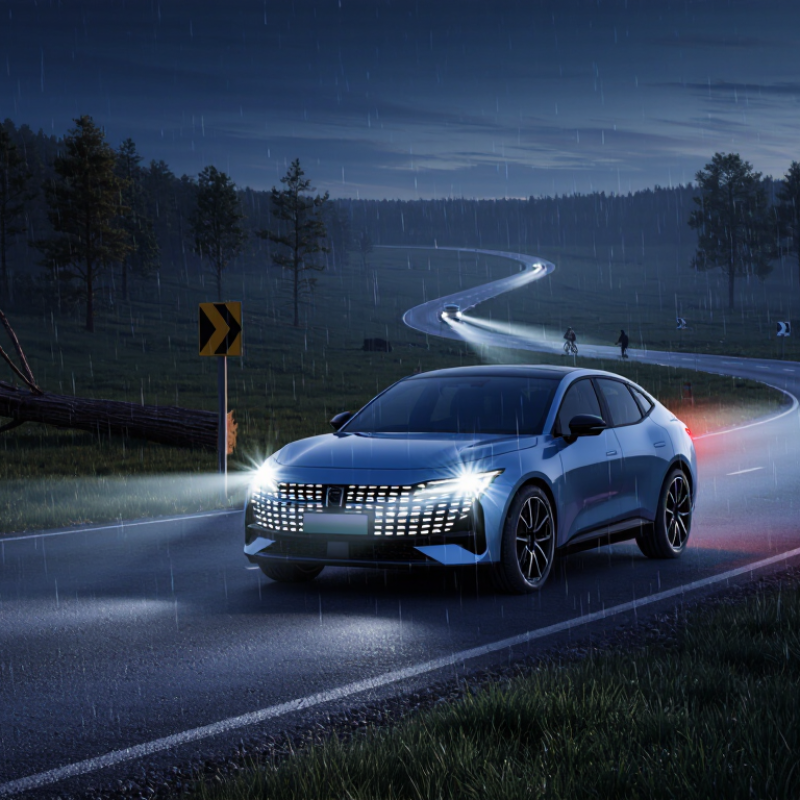
Advanced vehicle lighting can make hazards easier to recognize at night. A wider beam helps reveal pedestrians, cyclists, animals, and road debris near the vehicle. Adaptive headlights can follow curves and adjust illumination as driving conditions change. This reduces dark gaps on winding roads. Better visibility may also give drivers more time to react. Every second matters.
These systems support safer driving during rain, fog, snow, and dusty conditions. Carefully controlled light can improve road contrast without creating excessive glare for oncoming traffic. Daytime lighting also helps other road users notice a vehicle sooner. Clear turn signals improve communication at junctions and lane changes. Rear lighting can make braking easier to identify, especially in heavy traffic. Interior lighting may reduce distraction when drivers check essential controls.
The benefits depend on correct alignment, clean lenses, and regular inspection. A powerful lamp is not automatically a safer lamp. Poor adjustment can shine into another driver’s eyes. That risk deserves attention. In practical testing, technicians should check beam height, response speed, warning indicators, and performance in changing weather. Drivers should still reduce speed when visibility falls. Advanced lighting supports judgment; it cannot replace it. Some systems may respond imperfectly to unusual road layouts, dirty sensors, or sudden weather changes. Recognizing those limits makes the technology more reliable.
| No. | Key Benefit | How the Technology Helps | Relevant Data Dimension | Practical Safety Result | Important Consideration |
|---|---|---|---|---|---|
| 1 | Improved Nighttime Visibility | High-efficiency LED, laser or matrix systems can create a more precisely controlled beam than conventional fixed lamps. | Illuminance in lux, beam reach, beam width and cutoff quality. | Road markings, pedestrians, cyclists and obstacles are easier to identify in low-light conditions. | Performance depends on correct aiming, lens cleanliness and weather conditions. |
| 2 | Reduced Glare for Other Drivers | Adaptive beam control selectively dims light directed toward oncoming or preceding vehicles while maintaining illumination elsewhere. | Glare intensity, cutoff angle, vertical light distribution and response time. | Helps preserve the vision and comfort of other road users without requiring the entire high beam to be switched off. | Camera detection can be affected by dirt, fog, heavy rain or obstructed sensors. |
| 3 | Greater Vehicle Conspicuity | Daytime running lights and distinctive front or rear light signatures make a vehicle easier to notice. | Detection distance, luminous intensity, contrast against the background and activation status. | Other drivers, pedestrians and cyclists have more time to recognize the vehicle’s presence and movement. | Visibility can still be reduced by low sun, dense fog, snow or background lighting. |
| 4 | Better Cornering Visibility | Bending lights or cornering lamps direct additional illumination toward the vehicle’s turning path. | Steering angle, vehicle speed, turning radius and lateral illumination. | Intersections, cyclists, animals and road edges can become visible earlier during turns. | The system must be calibrated to prevent excessive light movement or distraction. |
| 5 | Faster Hazard Recognition | Automatic high-beam assistance and adaptive lighting maintain useful illumination without relying entirely on manual switching. | Hazard detection distance, driver reaction time, system activation time and road speed. | Earlier recognition increases the available time for braking, steering or changing lanes. | Lighting assists the driver but does not replace attentive driving or safe speed selection. |
| 6 | More Consistent Illumination | Multiple independently controlled light sources reduce abrupt changes between bright and dark areas. | Illumination uniformity, hotspot intensity, dark-zone coverage and color consistency. | A more even visual field can reduce the need for repeated eye adjustment on unlit roads. | Uniformity should be evaluated together with glare control and regulatory photometric limits. |
| 7 | Improved Visibility in Poor Weather | Specialized beam patterns and properly positioned fog lamps can improve close-range visibility in rain, mist or snow. | Beam height, near-field illumination, reflected glare and visibility distance. | Road edges and lane boundaries may remain easier to follow when atmospheric particles scatter light. | No headlamp can eliminate weather-related visibility loss; speed must match conditions. |
| 8 | Clearer Communication of Vehicle Intent | High-response LED turn signals, brake lamps and rear lighting communicate changes in speed or direction quickly. | Activation latency, luminous intensity, viewing angle and signal recognition distance. | Following drivers can recognize braking, turning and hazard warnings with less ambiguity. | Signals must remain visible from required angles and must not be obscured by accessories or cargo. |
| 9 | Lower Electrical Energy Consumption | LED light sources generally convert electrical energy into light more efficiently and require less frequent replacement than many older lamp types. | Electrical power draw in watts, operating temperature, service life and charging-system load. | Reduced auxiliary power demand can support overall vehicle efficiency, especially during extended operation. | Actual savings vary with lamp design, operating hours, thermal management and control software. |
| 10 | More Reliable Lighting Performance | Solid-state lighting has no filament and can use electronic monitoring to detect faults or reduced output. | Failure rate, fault-detection time, thermal stability, waterproofing level and output degradation. | Consistent operation improves the likelihood that essential lighting remains available during nighttime travel. | Reliability depends on heat dissipation, sealing, wiring quality and compliance with applicable regulations. |
Note: Lighting performance should be evaluated against applicable road-vehicle lighting regulations and measured under controlled conditions. Actual results vary with vehicle design, speed, weather, road geometry, maintenance and driver behavior.
It can follow steering input and illuminate a dark bend sooner. A pedestrian or fallen object may become visible earlier. Small gains matter.
No. Lighting cannot fix distraction, fatigue, or excessive speed. It only improves what the driver can see. Not magic.
Night travel represents a smaller share of driving but a larger share of fatal crashes. Dark roads can hide stopped vehicles, cyclists, and uneven edges. Visibility changes everything.
It may reduce repeated manual adjustments on winding roads. The beam can follow curves and reveal road details sooner. The effect varies.
Stay alert and adjust the lighting manually when necessary. Wet asphalt can create harsh reflections. Automatic settings may not respond perfectly.
Keep cameras, lenses, and sensors clean. Check beam alignment after repairs or installation. Calibration is easy to overlook.
Tidy lighting may support resale appeal when installation is documented. Sealed housings can help limit moisture around sensitive connections. Keep the paperwork.
Look for measured output, durable seals, and proper heat control. A brighter appearance does not always improve the road ahead. I would question dramatic brightness.
Advanced vehicle lighting systems play a vital role in improving safety, visibility, and overall driving performance. What are the benefits of advanced vehicle lighting systems? They can provide clearer illumination in darkness, poor weather, and complex traffic conditions, helping drivers identify road hazards, pedestrians, and other vehicles sooner. Smart lighting features can also support driver awareness by adjusting brightness, direction, and coverage according to speed, surroundings, and road conditions, giving drivers more time to react.
In addition to safety, advanced lighting can improve comfort and convenience by reducing glare, creating smoother transitions between lighting modes, and making night driving less tiring. Energy-efficient components may lower power consumption, reduce operating costs, and support better vehicle efficiency. Modern lighting can also enhance a vehicle’s appearance, strengthen its perceived value, and provide useful signals that improve communication with other road users. With better visibility, intelligent control, and efficient performance, advanced vehicle lighting contributes to a safer, more comfortable, and more enjoyable driving experience.

 DERT Lighting