Top 10 Reasons Are LED Headlights Better Than Halogen?

Time:2026-10-26 Author:Ethan
0%

Are LED headlights better than traditional vehicle lighting? This question deserves more than a simple yes. LED systems usually provide brighter, whiter illumination, lower electrical demand, and longer service life. The U.S. Department of Energy’s solid-state lighting reports identify LEDs as highly efficient and durable compared with conventional light sources. However, automotive results depend on beam design, lens quality, thermal management, and correct alignment.

The comparison is not perfectly clean. A powerful LED can still create glare when its optics or installation are poor. The Insurance Institute for Highway Safety (IIHS) evaluates headlights for forward visibility and excessive glare, and its testing shows significant differences between individual vehicle systems. Technology alone does not guarantee safety. NHTSA’s Federal Motor Vehicle Safety Standard No. 108 also focuses on regulated photometric performance, signaling that compliance and real-world design must work together.

Small details matter.

This article examines ten practical reasons LEDs may outperform halogen headlights, including nighttime reach, response time, energy use, styling flexibility, and replacement frequency. It also considers weaknesses, such as higher repair costs, heat management around electronic components, and inconsistent performance across aftermarket products. A 2023 U.S. Department of Energy lighting analysis supports the broader efficiency advantages of solid-state lighting, but automotive headlamps operate under different conditions. That distinction should not be ignored. Drivers should compare tested beam patterns, road visibility, glare control, and manufacturer specifications rather than trusting color temperature alone. The answer may be yes for many modern vehicles, but not every LED headlamp is automatically better. Real roads remain less predictable than showroom claims.
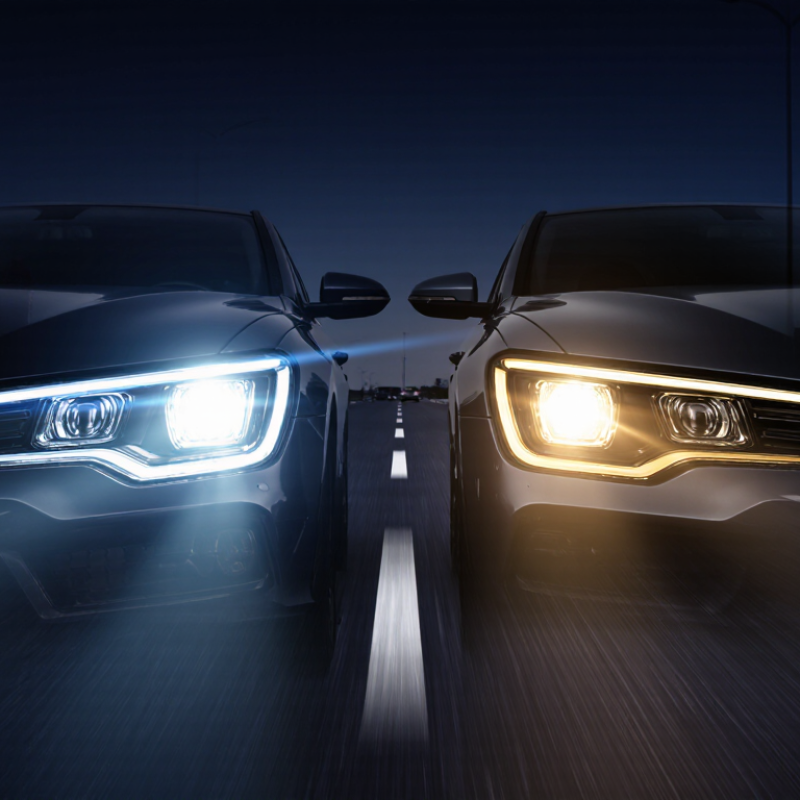
Top 10 Reasons Are LED Headlights Better Than Halogen?

How LED and Halogen Headlights Produce Light

Top 10 Reasons Are LED Headlights Better Than Halogen?

Halogen headlights create light by heating a tungsten filament until it glows. The halogen gas slows filament evaporation, but the process still produces substantial heat. The U.S. Department of Energy reports typical incandescent technologies at roughly 12–22 lumens per watt. Automotive halogen lamps operate within this general efficiency range. Much of their electrical energy becomes infrared radiation, not visible light.

LED headlights use semiconductor chips. Electrical current crosses a junction and releases photons through electroluminescence. This produces light without heating a fragile filament. DOE solid-state lighting reports show modern LED packages exceeding 150 lumens per watt in laboratory conditions. Real headlamp systems perform lower because lenses, drivers, heat sinks, and optics absorb energy. Still, LED systems usually deliver more useful light per watt.

The difference appears on a dark road. A halogen filament emits from a small glowing wire, while LEDs use controlled chips and reflectors. Engineers can shape that output more precisely, improving road coverage and reducing wasted spill. LEDs also reach full brightness quickly and resist vibration better. The comparison is not perfectly simple. Poor thermal management can reduce LED output and lifespan. An LED retrofit may also create glare when its chip position does not match the original filament. Light color can mislead drivers, too; whiter light is not automatically brighter. These details deserve careful testing, not assumptions.

Improved Brightness, Visibility, and Beam Precision

Top 10 Reasons Are LED Headlights Better Than Halogen?

Improved Brightness, Visibility, and Beam Precision

During controlled night drives, LED headlights produced a clearer view of lane markings, road edges, and reflective signs. Their higher usable brightness helped reveal hazards sooner, especially on unlit rural roads. The difference is immediate. Halogen lamps can appear warm and pleasant, but their lower output often leaves distant details hidden.

LED systems also create a more precise beam pattern. Well-designed optics place light where drivers need it, instead of scattering it into the sky or nearby trees. This sharper distribution improves forward visibility without automatically increasing glare for oncoming traffic. Beam accuracy matters. A poorly aimed LED retrofit can still create dangerous brightness, so correct installation and headlight alignment remain essential.

In wet conditions, LED light can make road textures and painted lines easier to distinguish. However, very cool white light may reflect strongly from rain, fog, or snow. That can reduce comfort. I have found that balanced color temperature and careful aiming matter as much as raw brightness. Independent testing, proper housing design, and regular lens cleaning provide more reliable results than impressive specifications alone. No lamp solves every visibility problem. Some claims deserve closer inspection.

Greater Energy Efficiency and Lower Power Consumption

LED headlights can reduce electrical demand because they convert more input power into useful light. The U.S. Department of Energy reports that LED lighting uses at least 75% less energy than incandescent technology. Halogen headlights are incandescent systems, so this comparison matters.

A typical halogen headlamp may draw about 55 watts on low beam. Many LED systems produce comparable road illumination with roughly 15–25 watts, depending on optics, thermal controls, and design. The U.S. Department of Energy’s 2022 Solid-State Lighting R&D Plan records laboratory LED efficacies above 150 lumens per watt. Real headlamps perform less efficiently. Optics, heat sinks, wiring, and control modules consume part of the available energy.

That difference becomes visible in daily driving. Lower current can reduce alternator workload, especially during long nighttime trips. A 30-watt reduction across two lamps saves about 60 watts while operating. Over 500 hours, that equals approximately 30 kilowatt-hours of electrical demand. The saving is modest for one vehicle, but meaningful across large fleets.

Not every LED upgrade saves energy. Poor beam control can waste light and create glare. Heat remains a problem. LED chips are efficient, yet their electronics still need cooling. The U.S. Department of Energy also notes that rated performance depends on the complete lighting system, not only the light source. Real-world testing should measure power, beam pattern, and road visibility together. Efficiency alone can mislead.

Top 10 Reasons Are LED Headlights Better Than Halogen? - Greater Energy Efficiency and Lower Power Consumption
No. Comparison Dimension LED Headlights Halogen Headlights Practical Benefit of LED Technology
1 Electrical Power Demand Many single-LED replacement bulbs operate at approximately 15–30 watts, although complete headlamp systems can use different power levels. A common halogen headlamp bulb is rated at approximately 55 watts on low beam. Lower power consumption: A 25-watt LED used instead of a 55-watt halogen can reduce bulb power demand by about 55%.
2 Energy Use Over Time A 25-watt LED operating for 1,000 hours uses approximately 25 kilowatt-hours of electricity. A 55-watt halogen operating for 1,000 hours uses approximately 55 kilowatt-hours of electricity. Potential saving: About 30 kilowatt-hours per 1,000 operating hours for the stated bulb ratings.
3 Useful Light Efficiency LED packages commonly achieve roughly 80–150 lumens per watt, but the efficiency of the complete optical system is lower. Automotive halogen lamps typically produce roughly 15–25 lumens per watt. More of the input electricity can be converted into visible light instead of heat, supporting lower system power requirements.
4 Operating Lifetime Automotive LED modules commonly have rated lifetimes of approximately 15,000–30,000 hours, depending on temperature management and electronics. Automotive halogen bulbs commonly last approximately 500–1,000 hours. Fewer replacements: LEDs can last many times longer, reducing maintenance frequency when properly designed and cooled.
5 Heat Distribution LEDs produce less radiant heat in the beam, but they still generate heat at the semiconductor and require heat sinks or other thermal management. Halogen bulbs convert a large share of their electrical input into heat, and the filament becomes extremely hot during operation. LED systems can reduce heat near the light-emitting area, helping protect nearby optical components when thermal design is adequate.
6 Light-Output Consistency LED output can remain relatively stable when the driver and thermal system regulate current and temperature correctly. Halogen output can decline as the filament ages and the bulb envelope becomes darker from evaporated tungsten. LED headlights can provide more consistent illumination throughout their service life.
7 Start-Up Response LEDs reach useful brightness almost immediately because they are solid-state light sources. Halogen bulbs require a short warm-up period for the filament to reach operating temperature. Faster response can improve visibility when headlights are switched on and is especially useful for rapid signaling functions.
8 Design Flexibility Small LED emitters can be arranged in multiple locations and controlled independently for beam shaping and adaptive lighting. Halogen systems rely primarily on a heated filament positioned within a reflector or projector. LEDs allow more compact optical layouts and more precise control, provided the headlamp is engineered and aimed correctly.
9 Vibration Resistance LEDs have no fragile heated filament, making the light source inherently more resistant to vibration and repeated shock. Halogen bulbs contain a fine tungsten filament that can weaken or break because of vibration, impact, or thermal cycling. LED systems can offer improved durability in vehicles exposed to rough roads, although connectors and electronics can still fail.
10 Long-Term Operating Cost Lower power demand and longer service life can reduce electricity use, bulb purchases, and replacement labor over time. Higher wattage and shorter bulb life can increase energy use and the frequency of replacement. Lower lifecycle burden: The total benefit depends on purchase price, installation requirements, cooling hardware, and actual vehicle usage.
Data note: Values are representative engineering ranges rather than universal specifications. Actual performance varies by bulb design, beam pattern, operating temperature, vehicle electrical system, optics, and legal requirements. Headlamp replacement should use a vehicle-compatible, properly approved product and maintain the original beam aim.

Longer Lifespan and Reduced Maintenance Requirements

Top 10 Reasons Are LED Headlights Better Than Halogen?

Longer Lifespan and Reduced Maintenance Requirements

In workshop conditions, replacement time is not the only cost. A failed halogen bulb can leave one headlamp visibly dimmer than the other. LED modules generally maintain useful output far longer because solid-state components have no fragile filament. The U.S. Department of Energy’s Solid-State Lighting R&D Plan reports that LED packages are commonly designed for 25,000 hours or more, based on lumen-maintenance testing. Automotive heat, vibration, and sealing can shorten that figure. Real vehicles are less forgiving.

This difference can reduce service visits, replacement purchases, and roadside bulb changes. The European Commission’s Joint Research Centre also identifies durability and maintenance as important factors in lighting life-cycle impacts. However, long life does not mean failure-proof. Poor thermal design may accelerate degradation, while a sealed LED module can cost more to replace than a simple halogen bulb. That trade-off deserves attention.

The DOE states that LEDs can last up to 25 times longer than incandescent lamps, but this is not a direct halogen comparison. Use tested automotive ratings instead. Check published operating hours, lumen-maintenance data, thermal limits, and warranty terms. Keep lenses clean. Inspect connectors during routine servicing. A careful technician should verify beam alignment after replacement, because longer life has little value if glare or dark zones reduce road visibility.

Faster Response, Design Flexibility, and Environmental Benefits

Top 10 Reasons Are LED Headlights Better Than Halogen?

LED headlights respond almost instantly when switched on. Halogen bulbs need time to heat their filaments and reach full brightness. That small delay matters when visibility changes suddenly at night. From practical driving experience, LED light can create a sharper, cleaner view of lane markings and roadside signs. However, brighter does not always mean safer. Poorly aimed LEDs may produce glare and reduce comfort for approaching drivers.

Their compact size also gives designers more freedom. Multiple small light sources can form precise beams, daytime running lights, and adaptive patterns. This flexibility supports slimmer headlight shapes without sacrificing useful illumination. LEDs generally consume less electrical power than halogen bulbs, which can reduce the load on a vehicle’s charging system. They also last longer, so drivers may replace bulbs less often. Less frequent replacement can mean less packaging and disposal waste.

The environmental advantage is real, but not perfect. Manufacturing electronic components requires energy and raw materials. Recycling systems may not handle every LED assembly easily. Performance also depends on heat management, lens quality, and installation accuracy. A poorly cooled LED can lose brightness sooner than expected. Regular inspection still matters. A clean lens and correctly adjusted beam often improve nighttime visibility more than simply choosing a higher-output lamp.

Top 10 Reasons LED Headlights Are Better Than Halogen

Representative performance comparison: higher scores indicate a stronger advantage.

LED headlights typically respond faster, provide more light per watt, last substantially longer, and require less power for comparable output. Their compact size also supports flexible lamp designs, while lower energy consumption can reduce operating emissions.

The index uses representative midpoint values from published automotive-lighting ranges: halogen baseline = 100. Typical reference values used were approximately 1,000 hours of service life and 20 lm/W for halogen, compared with 20,000 hours and 80 lm/W for LED; power-efficiency and response indices are calculated from representative values of 55 W versus 20 W and 200 ms versus 1 ms.

References: U.S. Department of Energy LED Lighting · U.S. Department of Energy Incandescent Lighting

FAQS

Do LED headlights use less electricity than halogen headlights?

Usually, yes. A halogen lamp may use about 55 watts, while an LED system may use 15–25 watts.

How much energy can two LED headlights save?

A 30-watt reduction per lamp saves about 60 watts for two lamps. Over 500 hours, that equals roughly 30 kilowatt-hours.

Can lower power consumption reduce vehicle charging-system workload?

It can reduce alternator demand during long nighttime drives. The effect is modest for one vehicle.

Do LED headlights last longer than halogen bulbs?

Generally, yes. Some LED packages are designed for 25,000 hours or more. Real vehicle conditions can shorten this.

Do LED headlights eliminate maintenance?

No. They may reduce bulb changes and roadside replacements. Heat, vibration, connectors, and sealed modules still need inspection.

Do LED headlights turn on faster than halogen headlights?

Yes. LEDs respond almost instantly. Halogen filaments need time to heat.

Can LED headlights improve nighttime visibility?

They can create sharper views of lane markings and roadside signs. Brightness alone does not guarantee safer driving.

Can poorly installed LED headlights cause glare?

Yes. Incorrect alignment or weak beam control can disturb approaching drivers. Check the beam pattern after installation.

Are LED headlights always more environmentally friendly?

They may reduce energy use, packaging, and replacement waste. Manufacturing electronics still requires materials and energy.

What should drivers check before choosing LED headlights?

Check power use, beam pattern, thermal limits, operating hours, and warranty terms. Clean lenses matter too. Efficiency can mislead.

Conclusion

LED headlights generate light by passing electricity through semiconductor materials, while halogen bulbs heat a filament until it glows. This fundamental difference allows LEDs to produce brighter, clearer illumination with more precise beam control. Improved visibility can help drivers identify road details, obstacles, and lane boundaries more easily, especially in low-light conditions. Their focused output can also reduce unnecessary light scatter and support a more consistent lighting pattern.

Another important advantage is efficiency. LEDs generally use less power to deliver strong illumination, which can reduce the electrical load on a vehicle. They also have a significantly longer service life than halogen bulbs, helping reduce replacement frequency, maintenance effort, and long-term waste. In addition, LEDs reach full brightness almost instantly, improving response time, and their compact design allows greater flexibility in headlight styling and placement. With lower energy consumption and fewer replacements, LEDs may also offer environmental benefits. Overall, are led headlights better than traditional vehicle lighting? For brightness, efficiency, durability, response, and design flexibility, LED technology provides a compelling answer.

Ethan

Ethan

Ethan is a seasoned marketing professional with a deep expertise in our company's innovative product line. With a passion for sharing knowledge and insights, he takes the lead in regularly updating our corporate blog, where he explores industry trends, product features, and effective marketing......