5 Best Trends Driving Innovation in Automotive Lighting?

Time:2026-09-13 Author:Mason
0%

Automotive lighting has moved beyond basic illumination. It now shapes safety, identity, efficiency, and the vehicle’s digital character. So, what drives innovation in automotive lighting? The answer is not one technology. It is the pressure to combine better visibility with cleaner design, lower energy use, and smarter vehicle communication.

The market is expanding with the vehicle itself. Grand View Research valued the global automotive lighting market at approximately US$34.46 billion in 2023. It also forecasts continued growth through 2030. Meanwhile, the International Energy Agency reported that global electric-car sales exceeded 14 million in 2023. Electric platforms encourage thinner LED systems, animated signatures, and energy-conscious designs. Every watt matters when range is visible on the dashboard.

Safety remains the strongest driver. Adaptive driving beams, matrix LEDs, infrared sensing, and precise optical control can improve visibility without dazzling other road users. Connectivity adds another layer. Lamps can support welcome sequences, charging signals, pedestrian communication, and vehicle-to-vehicle messages. Designers are also exploring micro-LEDs, OLEDs, laser modules, and recyclable materials.

Adrian van Hooydonk, BMW Group’s design leader, has described this direction simply: “Light is the new chrome.” The phrase captures lighting’s emotional value. It also exposes a weakness. Styling can move faster than regulation, testing, and public understanding. That gap deserves attention. The five trends ahead show where innovation is accelerating, and where the industry still needs restraint, evidence, and better real-world validation.
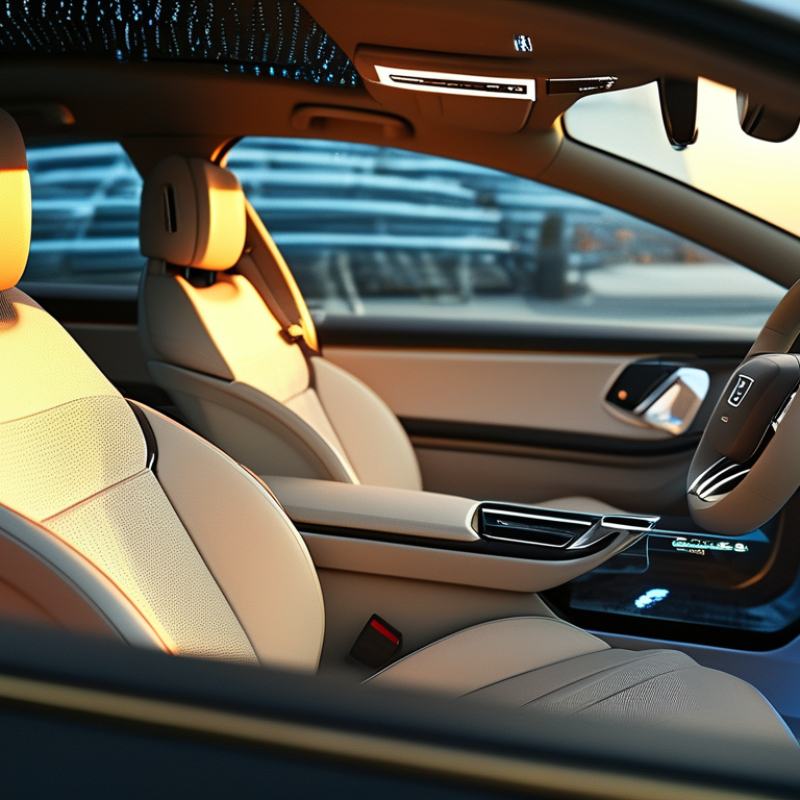
5 Best Trends Driving Innovation in Automotive Lighting?

LED Solid-State Lighting: 100–150 lm/W Efficiency Redefines Headlamps

LED Solid-State Lighting: 100–150 lm/W Efficiency Redefines Headlamps

LED solid-state lighting is changing how engineers design headlamps. The U.S. Department of Energy’s Solid-State Lighting R&D Opportunities report identifies 100–150 lm/W as a realistic performance range for advanced LED systems. More light now requires less electrical power. This can reduce thermal load and protect vehicle energy reserves. A headlamp can also become smaller, sharper, and easier to package.
The number alone is not enough. Optical losses, heat, lens contamination, and driver electronics reduce real output. In practical testing, a 120 lm/W LED may deliver less at the road surface. The difference is visible on a wet rural road. Glare control remains critical, too. The United Nations Economic Commission for Europe continues to emphasize controlled beam patterns and photometric compliance. Efficiency must support safety, not replace it.
Tips: Measure system efficacy, not only LED-chip efficacy. Test at low temperatures, high temperatures, and after vibration exposure. Check beam uniformity with calibrated equipment. Leave thermal margin. A cooler headlamp usually lasts longer, although that assumption needs regular validation. The International Energy Agency’s 2024 Energy Efficiency report also stresses that efficient technologies deliver greater value when real operating conditions are included. Engineers should record lumen output, junction temperature, and power consumption together. Brightness without dependable control is an incomplete innovation.

Adaptive Driving Beams: UNECE R149 Enables Precision Road Illumination

5 Best Trends Driving Innovation in Automotive Lighting?

Adaptive Driving Beams are changing how vehicles illuminate roads at night. UNECE R149 provides technical requirements for approved road illumination systems, including adaptive functions. These requirements encourage precise light distribution without creating unnecessary glare for other road users.

A camera can detect approaching headlights, tail lamps, road edges, and traffic signs. The lighting controller then adjusts individual segments within milliseconds. Dark areas remain bright, while selected zones are dimmed or blocked. This creates a wider useful view than fixed high beams. It can reveal a cyclist near the shoulder or a bend beyond a hedge. Small details matter.

The system is not magic. Rain, snow, dirt, and poor calibration can reduce detection accuracy. R149 compliance requires controlled testing, but real roads remain unpredictable.

Engineers must examine sensor alignment, software timing, beam transitions, and failure warnings. A workshop inspection should include a clean lens and accurate headlamp aim. One overlooked adjustment can affect visibility for everyone.

Adaptive Driving Beams also support more consistent lighting across different vehicle speeds and road shapes. Yet precision should not replace driver attention. The technology assists judgment; it does not remove responsibility.

Future improvements may depend on better environmental sensing, clearer diagnostics, and simpler maintenance procedures. Performance figures alone are not enough. Reliability must survive ordinary weather and ordinary mistakes.

OLED and MicroLED Systems: 1,000+ Pixels Enable Intelligent Light Signatures

OLED and MicroLED systems are reshaping automotive lighting through programmable pixels. More than 1,000 individually controlled pixels can create sharper light signatures, animated indicators, and clearer communication between vehicles and pedestrians. The effect feels less like decoration and more like a digital language.

A 2024 report from Yole Group identifies adaptive lighting and high-resolution systems as important growth areas in automotive electronics. The International Energy Agency also reported that global electric car sales exceeded 17 million in 2024. This expanding fleet increases demand for efficient, software-defined lighting. OLED panels offer thin, flexible surfaces and smooth illumination. MicroLED systems provide higher brightness, stronger contrast, and tighter pixel control.

Pixel count is not a magic number. Poor calibration can produce uneven brightness, distracting animations, or confusing signals. Safety must remain more important than visual novelty. The U.S. Department of Energy reports that solid-state lighting can use at least 75% less energy than incandescent lighting, supporting lower electrical loads. Still, real-world results depend on thermal management, weather resistance, optical design, and software testing. A bright prototype may fail in rain. That deserves more attention.

Connected Vehicle Lighting: V2X Communication Supports 360-Degree Signaling

Connected Vehicle Lighting: V2X Communication Supports 360-Degree Signaling

As vehicles become more connected, lighting can communicate beyond traditional turn and brake signals. V2X technology allows vehicles to exchange information with nearby cars, road infrastructure, pedestrians, and cyclists. Exterior lamps could show braking, turning, yielding, or an approaching emergency maneuver. These signals may appear across front, rear, and side lighting zones.

A nearby vehicle could receive a warning before its driver notices danger. At a junction, side-facing light patterns might indicate a vehicle’s intended path. This could help pedestrians understand movement in poor visibility. But effective design requires more than brighter lamps. Engineers must consider color, brightness, viewing angles, weather, and human reaction time. Signals need to remain clear during rain, glare, and heavy traffic. Legibility changes across cultures and road systems.

Reliable communication is equally important. Lighting should never depend on an unstable wireless message alone. Conventional signals must continue working when connectivity fails. Data should be protected, and system testing must include false messages, delayed alerts, and sensor errors. Still, this approach is not flawless. A flashing light may confuse people if its meaning is unfamiliar. Human expectations can differ from software logic. Small failures could create hesitation at critical moments. More roadside trials are needed, especially with cyclists and pedestrians. The concept is promising, but its language remains unfinished.

5 Best Trends Driving Innovation in Automotive Lighting? - Connected Vehicle Lighting: V2X Communication Supports 360-Degree Signaling

Data table covering standardized V2X inputs, lighting responses, safety value, and implementation considerations

Innovation Trend Standardized V2X Data or Trigger Lighting Function 360-Degree Signaling Use Case Primary Safety Value Implementation Considerations Data Basis
Intersection Awareness SPaT and MAP messages communicate signal status, phase timing, lane geometry, and intersection layout. Front, rear, and side light patterns can indicate an approaching red phase, permitted movement, or a recommended deceleration. A vehicle approaching a signalized junction receives infrastructure data and presents a clear visual cue to occupants and nearby road users. Improves awareness of signal changes and supports smoother speed adaptation before the stop line. Lighting behavior must remain supplemental to legally required lamps, signs, and traffic signals; human-machine-interface rules must be validated. SAE J2735 SPaT/MAP message definitions; ETSI ITS-G5 and C-ITS deployment concepts.
Cooperative Hazard Signaling BSM, CAM, and DENM-type messages can provide vehicle position, motion state, event type, and hazard location. Hazard alert animations, enhanced hazard-lamp patterns, or directional indications can show the side and relative position of a risk. A stopped vehicle, crash scene, road obstruction, or emergency braking event can be visually communicated to approaching traffic. Extends warning beyond direct line of sight, especially near curves, crests, or obstructed road sections. Event confidence, message authentication, position accuracy, and prevention of nuisance alerts are essential for safe operation. SAE J2735 Basic Safety Message; ETSI CAM and DENM specifications.
Vulnerable Road User Protection Object or person detection may be combined with cooperative awareness messages containing location, heading, and movement information. Directional exterior illumination can identify the side of a potential conflict and support a visible warning to pedestrians or cyclists. The vehicle signals a turning, crossing, or yielding risk through front, side, or rear lighting zones. Provides an additional communication channel for road users who may not hear an acoustic warning. Pedestrian interpretation, accessibility, glare control, and consistent signal meanings require user testing and regulatory review. Cooperative perception research, CAM/DENM concepts, and active-safety system design principles.
Emergency Vehicle and Priority Routing Priority or emergency-event messages can communicate the presence, direction, and estimated approach of an authorized emergency vehicle. Exterior lighting can indicate the detected approach direction and guide surrounding drivers to yield or create a corridor. Front, rear, and side zones provide directional awareness when the emergency vehicle is not yet visible. Reduces uncertainty during high-priority traffic situations and supports earlier driver response. Authorization, cybersecurity, false-message prevention, and regional emergency-light regulations are critical. C-ITS emergency-vehicle warning use cases and public-safety communication requirements.
Platooning and Cooperative Maneuvering Vehicle state messages may include position, speed, acceleration, heading, braking status, and intended maneuver information. Synchronized brake, turn, lane-change, or merge cues can make coordinated maneuvers more visible to nearby traffic. Vehicles communicate planned lateral or longitudinal movement through coordinated front, rear, and side illumination. Improves predictability when multiple connected vehicles change speed or position together. Lighting must never imply control authority; timing synchronization, fail-safe behavior, and interoperability are required. Cooperative driving research and standardized vehicle-state message fields.
Cloud-Connected Predictive Signaling Aggregated traffic, weather, roadwork, and incident information can be delivered through cellular connectivity or roadside systems. Lighting may adapt its warning priority, display duration, or directional emphasis according to verified road conditions. The vehicle provides advance visual cues for congestion, slippery surfaces, lane closures, or changing road geometry. Supports earlier awareness of hazards that are outside the vehicle's immediate sensor range. Data freshness, connectivity availability, privacy, cybersecurity, and clear separation between advisory and mandatory signals are necessary. C-ITS service architecture, cellular V2X connectivity models, and connected-road safety use cases.
Multi-Channel V2X Integration Direct vehicle-to-vehicle or vehicle-to-infrastructure communication may use short-range links, while network-assisted data may use cellular connectivity. A unified lighting controller converts validated messages into consistent front, rear, side, and interior visual outputs. The same event can be represented consistently around the vehicle, regardless of whether the input originates from another vehicle, infrastructure, or a network service. Improves coverage and resilience when one communication path is unavailable or limited. Requires message prioritization, low-latency processing, secure gateways, functional safety controls, and harmonized regional regulations. 3GPP cellular V2X specifications, ETSI C-ITS standards, and SAE V2X message frameworks.
Technical note: V2X-enabled lighting is generally an assistive communication layer. Its visual signals should complement, rather than replace, legally required lamps, traffic signals, driver assistance alerts, and established road-user communication conventions. Actual deployment depends on local regulations, communication coverage, cybersecurity controls, and human-factors validation.

Sustainable Lighting Design: Longer LED Lifespans Reduce Replacement Waste

Sustainable Lighting Design: Longer LED Lifespans Reduce Replacement Waste

Automotive lighting is becoming more durable as engineers improve LED efficiency, heat control, and electronic protection. Unlike many older bulbs, quality LED systems can operate for tens of thousands of hours under controlled conditions. This reduces the number of replacement parts entering workshops and waste streams. It also limits the resources used for manufacturing, packaging, and transport.

The real challenge is heat. An LED may use less energy, but trapped heat can shorten its life. Engineers now use aluminum heat paths, sealed housings, and thermal sensors to protect lighting modules. During development, technicians test vibration, moisture, temperature changes, and repeated switching. These tests reflect real conditions, such as winter roads, hot engine bays, and dusty construction routes. Reliable design requires more than a bright beam.

Longer LED life does not eliminate waste completely. A damaged control unit can force replacement of an entire lamp, even when the light source still works. That feels inefficient. Designers should consider replaceable drivers, recoverable materials, and clearer repair procedures. Lifecycle assessments can reveal whether a durable module truly reduces environmental impact. Small gains matter here. A lamp that lasts longer, uses fewer materials, and supports repair can create measurable benefits across a vehicle’s service life.

FAQS

What does 100–150 lm/W efficiency mean for LED headlamps?

It means producing more light with less electrical power. Headlamps may become smaller and easier to package. Real road output is usually lower.

Why can a 120 lm/W LED deliver less light on the road?

Optical losses, heat, dirty lenses, and driver electronics reduce useful output. A wet rural road can reveal the difference. The number alone is incomplete.

How should engineers test efficient headlamp systems?

Measure total system efficacy, not only chip performance. Test cold starts, hot conditions, vibration, beam uniformity, and lens contamination. Record light output, temperature, and power together.

Can better cooling improve headlamp reliability?

Usually, a cooler headlamp lasts longer. Thermal margin still needs regular validation. That assumption can fail under repeated heat cycles.

What can OLED and MicroLED lighting add to vehicles?

They can create thin surfaces, smooth illumination, and programmable light signatures. MicroLED systems offer strong brightness and precise pixel control. Some prototypes look impressive but fail in rain.

Do more than 1,000 pixels guarantee better automotive lighting?

No. Poor calibration may cause uneven brightness or distracting animations. Clear communication matters more than pixel count. Safety must lead the design.

How can connected lighting support communication around a vehicle?

Exterior lights could show braking, turning, yielding, or movement intentions. Signals might appear at the front, rear, and sides. A cyclist could notice a side-facing pattern earlier.

What problems can V2X lighting create?

Wireless messages may arrive late, fail, or contain incorrect information. Conventional signals should still work without connectivity. Unfamiliar flashing patterns may confuse pedestrians, so more roadside testing is needed.

Conclusion

What drives innovation in automotive lighting is the combination of efficiency, intelligence, safety, connectivity, and sustainability. LED solid-state lighting is transforming headlamps by delivering approximately 100–150 lumens per watt, providing brighter illumination while using less energy. Adaptive Driving Beams, supported by UNECE R149, can precisely shape light distribution to improve visibility without unnecessarily affecting other road users.

At the same time, OLED and MicroLED systems with more than 1,000 individually controlled pixels are enabling intelligent light signatures, dynamic communication, and highly flexible design possibilities. Connected vehicle lighting is also evolving through V2X communication, allowing vehicles to exchange visual signals across a 360-degree environment and support clearer interaction with surrounding traffic. Finally, longer-lasting LED components reduce maintenance needs and replacement waste, helping create lighting systems that are more durable, efficient, and environmentally responsible.

Mason

Mason

Mason is a seasoned marketing professional with a deep expertise in the company's offerings and a passion for driving brand awareness. With a strong background in digital marketing strategies, he has an innate ability to connect with diverse audiences and effectively communicate product benefits.......