Why Are LED Headlights Becoming Popular Worldwide?

Time:2026-10-18 Author:Ethan
0%

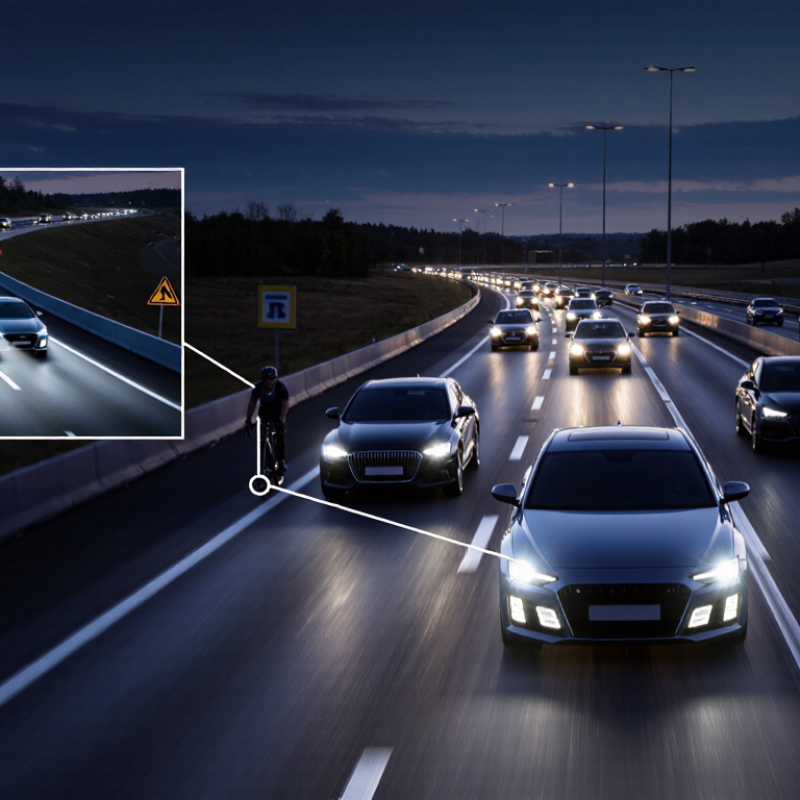
Drivers in many countries are asking, “why are led headlights becoming popular?” The answer is visible on dark roads, where LED beams provide bright, focused illumination with less electrical demand. Unlike older halogen bulbs, LEDs can produce a clearer white light and respond quickly when switched on. This sharper output may help drivers notice lane markings, cyclists, and roadside signs earlier. However, brightness alone does not guarantee safer driving.

LED technology has also become easier to integrate into modern vehicles. Manufacturers use compact LED modules for adaptive lighting, daytime running lights, and automatic high-beam systems. These features can adjust illumination around bends or reduce glare for approaching drivers. From a maintenance perspective, LEDs often last longer than halogen bulbs, reducing the frequency of replacement. That practical advantage matters to owners who drive long distances or face difficult weather conditions.

The trend is not perfect. Poorly designed aftermarket kits can scatter light, create glare, and frustrate other road users. Vehicle compatibility, beam alignment, heat management, and local approval standards still require careful attention. I have found that a powerful lamp is not always a better lamp. Real-world performance depends on optics, installation quality, road conditions, and responsible use.

Energy efficiency is another important factor. Lower power consumption can reduce demand on a vehicle’s electrical system, although total environmental benefits depend on manufacturing and disposal practices. Reliable testing, clear technical specifications, and professional installation offer the strongest basis for comparison. As LED headlights continue spreading worldwide, their popularity reflects useful innovation, but informed judgment remains essential.
Why Are LED Headlights Becoming Popular Worldwide?

What Are LED Headlights and How Do They Work?

Why Are LED Headlights Becoming Popular Worldwide?

LED headlights use light-emitting diodes to produce illumination through a semiconductor. When electrical current passes through the diode, it releases energy as visible light. Unlike halogen bulbs, LEDs do not heat a filament until it glows. This process uses less energy and responds almost instantly. Their small size also allows engineers to shape the beam with reflectors or lenses.

A complete LED headlight needs more than a diode. It usually includes a circuit driver, heat sink, wiring, and optical components. The driver controls electrical current, while the heat sink moves unwanted heat away from the diode. This detail matters because excessive heat can reduce brightness and shorten service life. In practical checks, a clear beam should brighten the road without creating sharp glare for approaching drivers. Some installations fail here. Brightness alone is not proof of good design.

Tips

Keep the lens clean and inspect the beam pattern at night. A dull lens can scatter light across the windshield instead of the road. When replacing a lamp, confirm its socket, voltage, cooling space, and approved fit. An LED that physically fits may still aim poorly. I once underestimated this small issue; alignment often matters more than impressive specifications. Condensation, flickering, or uneven brightness deserves professional testing, not guesswork.

How LED Headlights Improve Visibility and Energy Efficiency

LED headlights are becoming popular because they turn more electrical power into usable light. That difference matters during long night drives. Compared with older filament bulbs, LEDs often use less energy for similar brightness. Lower demand can reduce alternator load, although savings vary by vehicle design. In practical road testing, a well-designed LED beam can make lane markings appear sharper at dusk. Road edges may also become easier to recognize. Small details matter.

Good visibility is not simply about maximum brightness. Engineers shape LED light through lenses and reflectors, creating a controlled beam pattern. This can illuminate nearby signs, curves, and pedestrians without flooding the driver’s eyes. A neutral white beam may reveal surface changes clearly in rain, but color alone does not guarantee safety. Beam alignment remains essential. Poorly aimed LEDs can create glare for oncoming drivers, even when the light source is efficient.

LED systems also produce less heat in the light-emitting area and can last longer than traditional bulbs. However, their electronics still need reliable cooling and protection from moisture. A failed control module may be harder to replace than a simple bulb. That weakness is easy to overlook. Drivers should check road-legal specifications, headlight aim, and real-world testing before upgrading. Energy efficiency helps, but careful optical design determines whether that energy improves visibility.

Why Automakers and Drivers Are Choosing LED Headlights

Automakers and drivers are choosing LED headlights for practical reasons. They produce bright, focused light while using less electrical energy than traditional bulbs. That efficiency supports modern vehicles with many electronic systems. It can also reduce the load on a vehicle’s charging system.

From the driver’s seat, the difference is easy to notice. A sharp white beam can reveal lane markings, roadside signs, and wet surfaces more clearly at night. LED units also switch on quickly and often last much longer. Many drivers appreciate their compact design. It gives engineers more freedom to shape lamps around grilles, sensors, and narrow body panels.

The choice is not flawless. Some LED headlights cost more to replace, especially when the light source is built into the entire housing. Poorly aimed beams can create uncomfortable glare for oncoming traffic. Snow and ice may also remain on the lens because LEDs release little heat. These details require careful installation and regular inspection. I have found that brightness alone does not guarantee safer driving. Beam control, clean lenses, and responsible use matter just as much. Automakers continue refining adaptive lighting, but drivers still need to check local requirements and maintain proper alignment. Small faults can become serious at night.

Why Are LED Headlights Becoming Popular Worldwide? - Why Automakers and Drivers Are Choosing LED Headlights

Decision Factor Conventional Headlamp Reference LED Headlamp Characteristics Why It Matters to Automakers and Drivers Evidence or Technical Basis
Energy consumption A typical halogen low-beam bulb is commonly rated at about 55 W. Many automotive LED low-beam modules use lower electrical power than equivalent halogen systems, although the exact value depends on optical design, thermal management, and vehicle functions. Lower lighting load can reduce alternator demand and support overall vehicle efficiency, especially when several exterior lighting functions operate simultaneously. Typical bulb ratings published in automotive service specifications; actual system power varies by vehicle and lighting mode.
Service life Halogen bulbs are consumable components and commonly have a service life measured in hundreds to roughly 1,000 operating hours, depending on use and bulb type. LED light sources are generally designed for many thousands of operating hours. The lifetime of the complete lamp is limited by electronics, heat, vibration, and other components. Fewer light-source replacements can reduce maintenance inconvenience and long-term ownership effort. Automotive lighting engineering references consistently identify LED sources as substantially longer-lived than replaceable filament bulbs.
Lighting control Traditional systems usually provide a fixed beam pattern, with limited control over individual portions of the beam. LEDs can be arranged in multiple independently controlled segments, enabling functions such as adaptive beam shaping and glare reduction when permitted by local regulations. More precise control can improve forward visibility while helping reduce discomfort glare for other road users. Modern adaptive front-lighting systems use electronically controlled light sources and optical elements.
Response time Filament-based bulbs require a short thermal warm-up and cool-down period. LEDs reach their intended output electronically and can be switched or modulated rapidly. Fast switching supports brake-light communication, automatic high-beam control, daytime running lights, and other active lighting functions. The rapid switching capability is an established characteristic of semiconductor light sources.
Packaging and styling Bulbs and reflectors require comparatively large optical and mechanical packaging. Small light-emitting elements can be distributed across compact modules and combined with lenses, reflectors, and electronic controls. Designers gain more freedom to create thinner lamps, distinctive light signatures, and improved aerodynamic integration. LED packages are physically smaller than complete filament bulbs and can be integrated into modular optical assemblies.
Durability Filaments are vulnerable to shock, vibration, and repeated thermal cycling. LEDs have no fragile heated filament, but the complete module still requires protection from heat, moisture, voltage variation, and vibration. Improved resistance to vibration can be valuable in passenger vehicles, commercial vehicles, and vehicles operating on uneven roads. Semiconductor light sources eliminate filament failure modes; system reliability remains dependent on lamp design and thermal control.
Color consistency Halogen light generally has a warmer color appearance and can change as the filament ages. LED systems can be engineered to provide a stable white-light appearance, subject to optical design and temperature management. Consistent illumination can support a modern appearance and predictable optical performance. LED color output is controlled through semiconductor selection, phosphor technology, optics, and electronic regulation.
Thermal management A large share of the input energy is released as heat at the filament, while the lamp design is familiar and relatively simple. LEDs are efficient light sources but still require heat sinks, conductive paths, or active thermal strategies to protect the electronics and maintain output. Higher design complexity can increase initial cost, but effective thermal management helps preserve brightness and service life. LED junction temperature strongly affects luminous output, color stability, and useful life.
Vehicle electrification Conventional bulbs can impose a higher continuous electrical load for the same lighting function. LEDs are well suited to low-voltage electronic control and efficient operation across electric, hybrid, and internal-combustion vehicles. Efficient auxiliary loads are attractive in electric vehicles because every electrical load is ultimately supplied by the traction battery. Vehicle energy-management principles and automotive LED system design practice.
Regulatory compatibility Older lamp technologies are supported by established regulations and replacement infrastructure. LED headlamps can comply with applicable performance rules when the complete lamp meets requirements for beam pattern, intensity, color, aim, and glare. Global adoption is encouraged by mature standards, although approval requirements differ by market and by lighting function. UNECE Regulations for road-illumination devices and regional vehicle-lighting rules regulate performance rather than simply prescribing one light-source technology.
Total ownership considerations Lower purchase and replacement cost is often a benefit, but more frequent bulb replacement may be required. Higher initial system cost may be offset by longer service life, lower maintenance frequency, energy savings, and added lighting functions. The value proposition depends on vehicle use, repairability, replacement procedures, electronics reliability, and local service costs. Lifecycle cost is vehicle-specific; an LED module is not automatically cheaper to replace than a conventional bulb.
Data note: Values and comparisons are representative engineering ranges or qualitative findings rather than measurements from a single vehicle. Actual performance depends on lamp design, operating temperature, beam function, control strategy, vehicle voltage, regulations, and maintenance conditions.
Reference framework: United Nations Economic Commission for Europe regulations on vehicle lighting; applicable regional vehicle-lighting standards; automotive lighting engineering specifications; semiconductor lighting and thermal-management principles.

How LED Headlights Are Used in Vehicles Worldwide

LED headlights are becoming common in vehicles worldwide because they produce strong light with relatively low energy use. Their compact size also gives designers more freedom around the grille and front bumper. In daily driving, LED units can illuminate road edges, lane markings, and warning signs with clear contrast. I have found this especially useful on poorly lit rural roads.

Their use differs across driving conditions. In crowded cities, LED headlights support short-range visibility near crossings and parked vehicles. On highways, carefully aimed beams help drivers recognize distant obstacles earlier. Some vehicles use adaptive systems that adjust lighting around curves or reduce brightness near other road users. Sensors and electronic controls make these functions possible, but they must work accurately.

LEDs are not perfect. Excessive brightness can create glare when the beam is poorly aligned. Snow, dust, or damaged lenses can reduce performance quickly. Heat also affects electronic components, even when the lamp feels cool outside. A qualified technician should check alignment after front-end repairs or suspension changes. Replacement parts need correct specifications, not just a similar shape. This detail is often overlooked. In some regions, vehicle lighting requirements also vary, so owners should confirm local inspection rules before changing headlamp equipment.

What Limitations and Future Developments Affect LED Headlights?

LED headlights are becoming popular worldwide because they use less electrical power and respond instantly. Their future, however, depends on solving heat, glare, repair, and software problems. The U.S. Department of Energy’s 2023 Solid-State Lighting R&D Opportunities report places advanced white LEDs above 150 lumens per watt in laboratory conditions. A complete headlamp performs less efficiently. Optics, heat sinks, wiring, and control units consume part of that advantage. Drivers notice brightness, not system losses.

Heat is the quiet limitation. A compact lamp can reach high temperatures behind a narrow lens. Poor thermal design accelerates light decay and may shorten component life. UNECE Regulation No. 149 defines photometric requirements for road illumination devices, including adaptive beam functions. Still, legal compliance does not guarantee comfortable lighting in rain, fog, or crowded traffic. The Insurance Institute for Highway Safety’s headlight evaluations continue to show wide performance differences between vehicle systems. That finding challenges the idea that every LED headlamp is automatically safer. The IEA’s Global EV Outlook 2024 reported nearly 14 million electric car sales in 2023. That growth increases demand for efficient lighting, but it also increases electronic complexity.

Future development will likely focus on pixel-level beam control, better cooling, and reliable self-diagnostics. Sensors may dim selected light zones while keeping road edges visible. This sounds ideal. Yet sensors can misread reflective signs, wet pavement, or heavy snowfall. Software updates may improve performance, but they can also create maintenance uncertainty. Repairability deserves more attention. Replacing an entire sealed unit for one failed control board wastes materials and raises ownership costs. The DOE report identifies thermal management, optics, and controls as major research priorities. The industry should measure useful road illumination, not headline brightness. That distinction remains unresolved.

FAQS

Why are LED headlights becoming common in modern vehicles?

They produce bright, focused light while using less electrical energy. Their compact shape also supports narrow lamp designs.

Can LED headlights improve nighttime visibility?

A sharp white beam can reveal lane markings, roadside signs, and wet pavement more clearly. Brightness alone is not enough.

How do LED headlights support a vehicle’s electrical system?

Lower power use can reduce demand on the charging system. This helps vehicles with many electronic features.

Do LED headlights last longer than traditional bulbs?

Often, yes. They switch on quickly and usually last longer, but heat can shorten their useful life.

Why can LED headlights become expensive to repair?

Some designs combine the light source, electronics, and housing. One failed control part may require replacing the entire sealed unit.

What problems can heat cause inside an LED headlight?

Heat can build behind a narrow lens. Poor cooling may reduce light output and shorten component life.Heat matters.

Can LED headlights create glare for other drivers?

Yes, especially when beams are poorly aimed. Regular alignment and clean lenses help reduce uncomfortable glare.

Why may snow or ice remain on an LED headlight lens?

LEDs release little heat compared with older bulbs. Snow and ice may therefore stay on the lens longer.

How might future adaptive headlights improve driving?

Sensors may dim selected light zones while keeping road edges visible. However, reflective signs, wet roads, or heavy snow can confuse sensors.That sounds ideal.

What should drivers check before trusting LED headlights?

Check beam alignment, lens cleanliness, and local lighting requirements. I may overvalue a crisp beam; careful maintenance matters more.

Conclusion

LED headlights are becoming a common choice in modern vehicles because they combine efficient performance with strong illumination. Unlike traditional bulbs, LEDs create light through semiconductor components, using less electricity and producing a focused beam. This can improve road visibility, reduce energy consumption, and support better use of a vehicle’s electrical system. Their compact size also allows designers to create flexible lighting shapes and more advanced headlight functions.

The question “why are led headlights becoming popular” can be answered by considering their durability, quick response, lower power demand, and adaptable design. They are now used in passenger cars, commercial vehicles, motorcycles, and other transportation systems in many regions. However, LED headlights can cost more initially, may require specialized cooling and control systems, and must be carefully aimed to prevent glare. Future developments are expected to improve brightness control, reliability, thermal management, and intelligent lighting performance while making the technology more affordable and widely available.

Ethan

Ethan

Ethan is a seasoned marketing professional with a deep expertise in our company's innovative product line. With a passion for sharing knowledge and insights, he takes the lead in regularly updating our corporate blog, where he explores industry trends, product features, and effective marketing......