Advanced OEM Engineering Solutions & System Components
Established in 2012, Ningbo DERT Lighting Co., Ltd. has grown to become a benchmark professional manufacturer specializing in automotive lighting systems, high-performance LED headlights, tail lights, and specialized vehicle lighting solutions. Catering to the global automotive aftermarket and Tier-1 OEM suppliers, we operate a modern, vertically integrated manufacturing facility spanning 18,000 square meters in Ningbo, Zhejiang Province, China.
Our workforce of over 320 skilled professionals comprises optical engineers, electronics experts, R&D pathfinders, quality assurance inspectors, and dedicated international sales consultants. By marrying world-class engineering capabilities with Chinese production agility, DERT Lighting ensures that each lighting component delivered meets the highest thresholds of durability, illumination precision, and compliance.
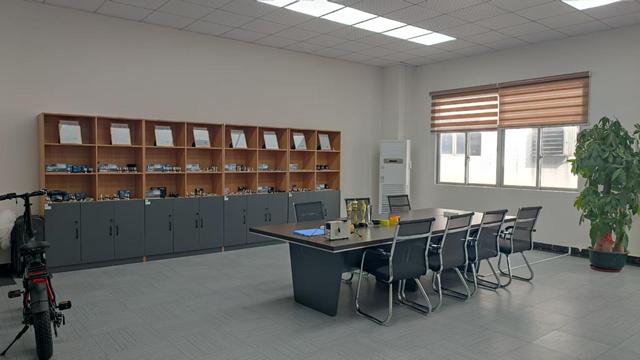
Enterprise capacity engineered for rapid global distribution
Why Tier-1 automotive brands and global distributors choose Ningbo industrial clusters
Ningbo, Zhejiang hosts one of the world's most mature automotive supply chain ecosystems. This guarantees instant, cost-effective access to premium raw polycarbonates (PC), PMMA materials, high-grade driver circuit components, and specialized packaging, slashing lead times significantly.
By keeping industrial design, CAD layout development, optical simulations, and injection mold fabrication entirely in-house, Chinese exporters reduce tooling turnaround times for customized tail light assemblies from months to weeks.
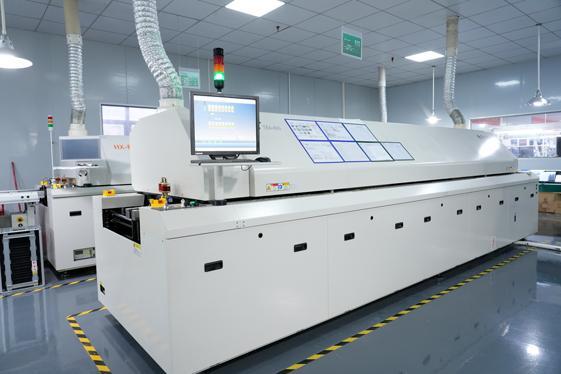
Through massive economies of scale and high-speed automated SMT and assembly lines, DERT Lighting offers Tier-1 level quality at a highly competitive unit cost, allowing global importers to optimize profit margins without sacrificing E-Mark or DOT reliability.
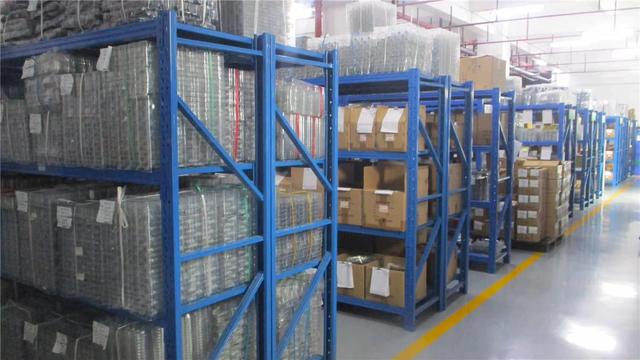
Inside our 18,000 square meter factory showing rigorous manufacturing process controls
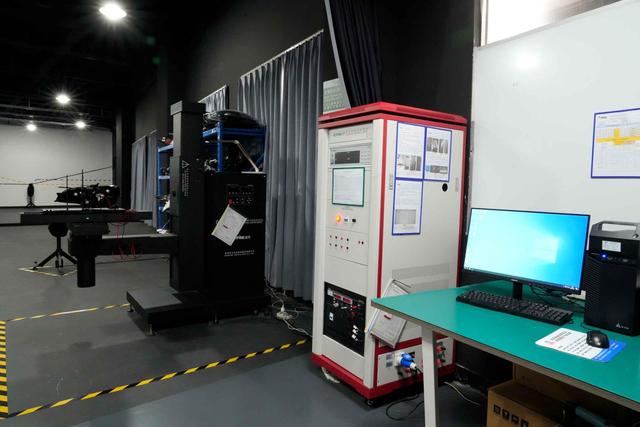
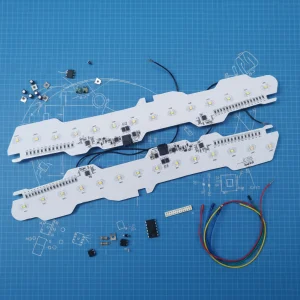
The heart of any modern LED tail light assembly lies in its driver PCB assembly (PCBA). In our dust-controlled facilities, high-precision Surface Mount Technology (SMT) machines place high-brightness LEDs, resistors, capacitors, and microprocessors with extreme accuracy.
This automated precision guarantees uniform voltage regulation, eliminates thermal focal points, and prevents the premature component failures frequently found in lower-tier aftermarket lighting products.
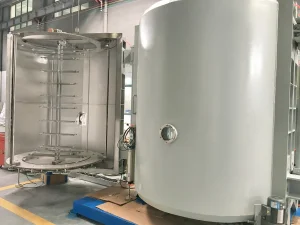
To achieve distinct, razor-sharp light beams and premium aesthetics (such as smoke, amber, or chrome finishes), we utilize specialized vacuum-coating processes. Utilizing computerized PLC controllers, our robotic vacuum coating lines deposit ultra-thin metallic and anti-UV layers onto internal reflective components.
This ensures that our tail light enclosures keep their reflective properties and prevent optical degradation or yellowing, even when exposed to intense UV rays and extreme weather conditions.
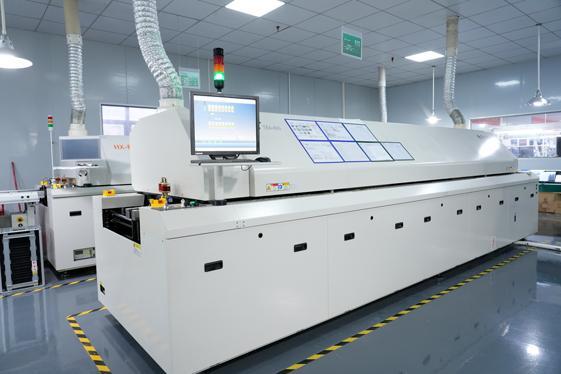
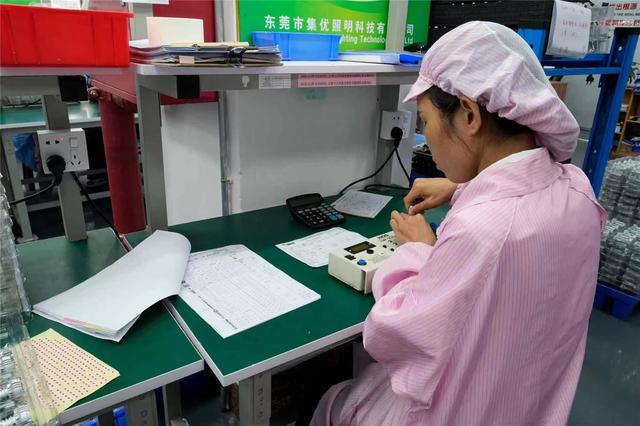
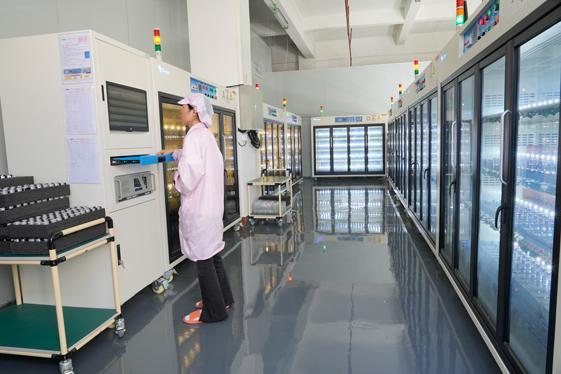
Before any tail light system is packaged for export, it undergoes extensive testing in our optoelectronic laboratories. Using goniophotometers and integrating spheres, our engineering team measures the luminous flux, color coordinate rendering, and precise beam angle distribution.
This scientific validation ensures that the braking, signaling, reverse, and running light functions conform fully to ECE R7/R6 regulations for Europe, and FMVSS 108 standards for North America.
The transition from basic illumination to smart, communicative exterior lighting networks
Modern consumers demand high-end aesthetics. We design dynamic sequential turn signals (sweeping signals) and welcome-home lighting signatures that smoothly sweep across the lamp structure. By using specialized microprocessor controllers on the PCBA, we create fluid animations that are both eye-catching and compliant with global signaling regulations.
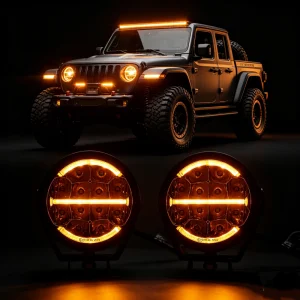
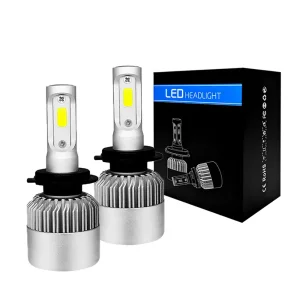
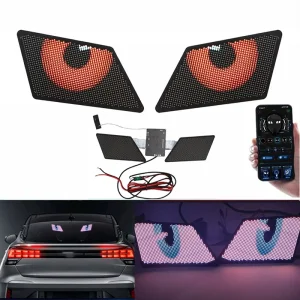
The customization market is shifting toward interactive user control. As showcased in our latest product line, LED headlights and tail light assemblies can now interface with smartphone applications via low-energy Bluetooth. Users can modify colors, light patterns, and custom animations (such as "demon eye" modes) on-demand for exhibition and off-road applications.
With the rise of Electric Vehicles (EVs) where every watt of power impacts vehicle range, reducing weight is key. Modern tail lights utilize ultra-thin, structurally stable polycarbonate materials with superior light transmission properties. This reduces assembly weight by up to 25% while lowering energy consumption to a fraction of traditional incandescent lamps.
To eliminate moisture buildup inside lens covers, modern assemblies utilize robotic ultrasonic plastic welding alongside high-performance Gore-Tex breathers. These breathers let pressure equalize dynamically while completely blocking dirt, dust, and water ingress, maintaining an IP67/IP68 rating indefinitely.
Providing specialized engineering for diverse automotive sectors worldwide
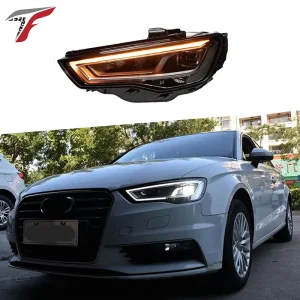
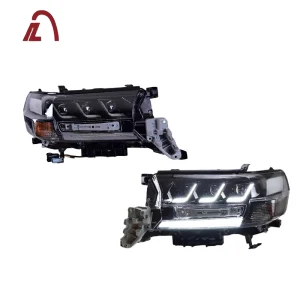
For car enthusiasts and importing brands focused on modification markets, DERT Lighting designs direct plug-and-play retrofit assemblies for vehicles like the Audi A3, Toyota Land Cruiser, and various premium SUVs. These models upgrade standard lighting to modern LED and OLED signatures, integrating built-in resistors to ensure error-free CAN-bus system compatibility.
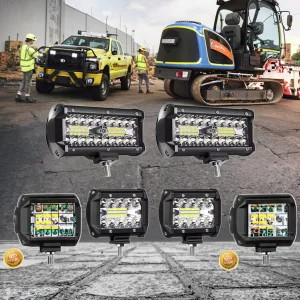
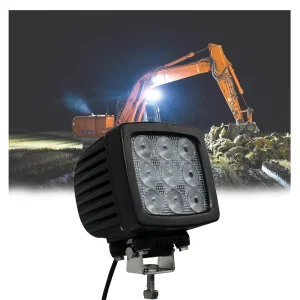
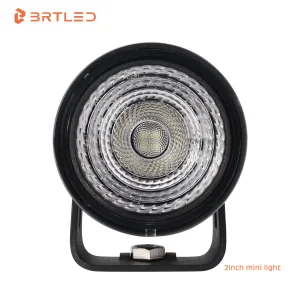
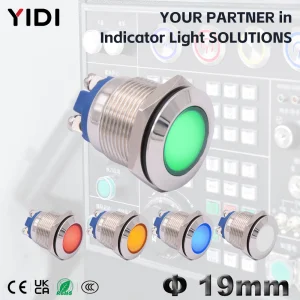
Commercial vehicle environments expose lights to relentless vibration, dust, and humidity. We engineer rugged LED warning lights, waterproof work lights, and indicator lamps (19mm flat metal indicators and 24V round tractor lights) specifically designed to withstand these harsh conditions. Using vibration-absorbing brackets and thick UV-stabilized lenses, these units operate reliably over long service intervals, minimizing fleet downtime.
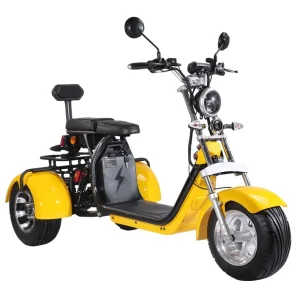
As lightweight electric utility vehicles (like golf carts and specialized ATVs) grow in popularity, demand has surged for high-efficiency lighting and strong custom frames. DERT Lighting offers bespoke engineering options, providing integrated LED signal lights, headlights, and mechanical components built to handle the unique electrical setups of lithium-ion drivetrains.
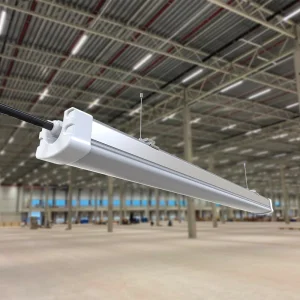
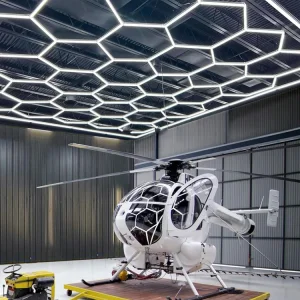
Beyond vehicular units, quality automotive presentation relies on high-end facility lighting. Our linkable hexagonal honeycomb LED systems illuminate detailing garages, car showrooms, and inspection bays. These systems deliver shadow-free, high-color-rendering (CRI >90) light, allowing technicians to verify paint corrections, tint quality, and tail-light installations with exceptional precision.
Streamlined logistics, tooling guarantees, and professional quality assurance workflows
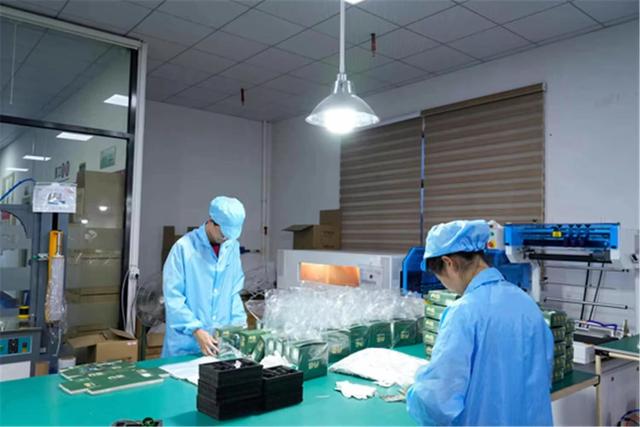
Collaborating with DERT Lighting is built on clear milestones, professional project management, and intellectual property protection:
Whether you require white-label packaging, custom circuit engineering, or specialized lighting patterns, our dedicated export support team handles all aspects of customs clearance, harbor logistics, and maritime freight scheduling.
Navigating diverse regulatory frameworks can be complex for global importers. DERT Lighting guarantees that tail lights intended for European countries carry the E-Mark certificate (ECE R6, R7, R23, R38, etc.), which confirms compliance with strict light intensity and color parameter guidelines.
For North American markets, our designs are rigorously engineered to comply with the Federal Motor Vehicle Safety Standard 108 (FMVSS 108). This design-level compliance helps avoid customs delays, liability issues, or product recalls, ensuring peace of mind for our distribution partners.
Key information regarding ordering, customization, engineering validation, and export operations
For standard off-the-shelf items or running stock, the MOQ starts at 50 to 100 sets. For custom OEM designs requiring unique plastic injection molds, custom PCBs, or personalized branding, the initial order threshold is typically 500 to 1,000 sets. We also offer prototype sampling stages prior to committing to full mass production runs.
Moisture intrusion is prevented through a multi-step sealing strategy. First, we use computer-guided automated glue dispensing machines to apply high-grade silicone sealant uniformly. Second, critical joints undergo ultrasonic welding for strong plastic integration. Finally, we install breathable membranes (such as Gore-Tex valves) that allow internal air to expand and escape without letting external water droplets in.
Modern LED setups draw significantly less current than incandescent bulbs, which can lead to dashboard warnings or rapid indicator flashing. To prevent this, our custom tail light assemblies feature integrated decoders and load resistors. For premium and complex electrical platforms, we develop dedicated exterior driver modules that mimic standard power signatures, ensuring seamless compatibility.
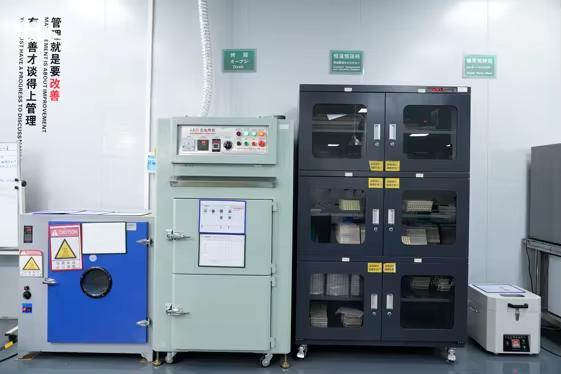
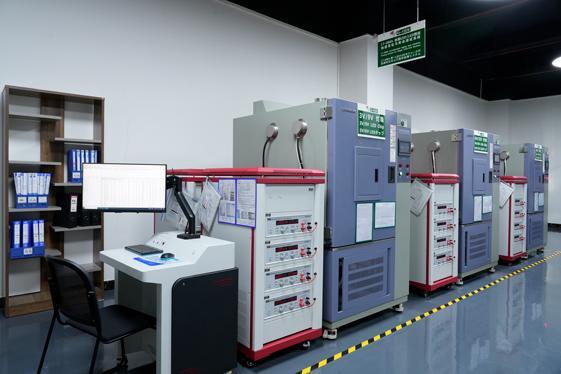
Every product batch is subjected to a comprehensive testing matrix: thermal cycle chamber testing (-40°C to 80°C), continuous vibration simulation testing to prevent PCB solder joints from fracturing, high-pressure IPX9K water spray testing, and salt-spray chamber testing to verify anti-corrosion on metal connections.
OEM Certified Assemblies, Bulbs, and Workshop Illumination Hardware
 DERT Lighting